If I could pass on the knowledge that lives “here”
and place it, just like that, “there,”
I would do it now.
If only it were possible, way back then,
while learning,
after all…

It was in a workshop in São Brás, in the municipality of Ribeira Grande, on the island of São Miguel in the Azores, that I met Domingos Melo.
The year was 2019. At the invitation of Santa Casa da Misericórdia do Divino Espírito Santo da Maia, I was preparing audiovisual materials for the Ribeira Grande Welcome Center housed next to the Maia Tobacco Museum.
I filmed him one morning. Were it not for the shoots still ahead of me, I would have gladly spent days recording our conversation. I wanted to. But it wasn´t possible.
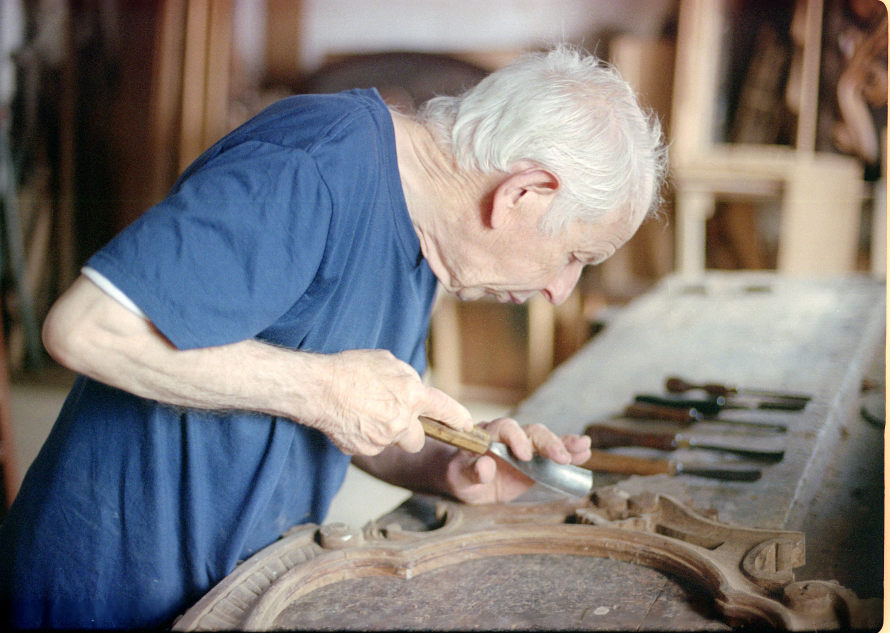


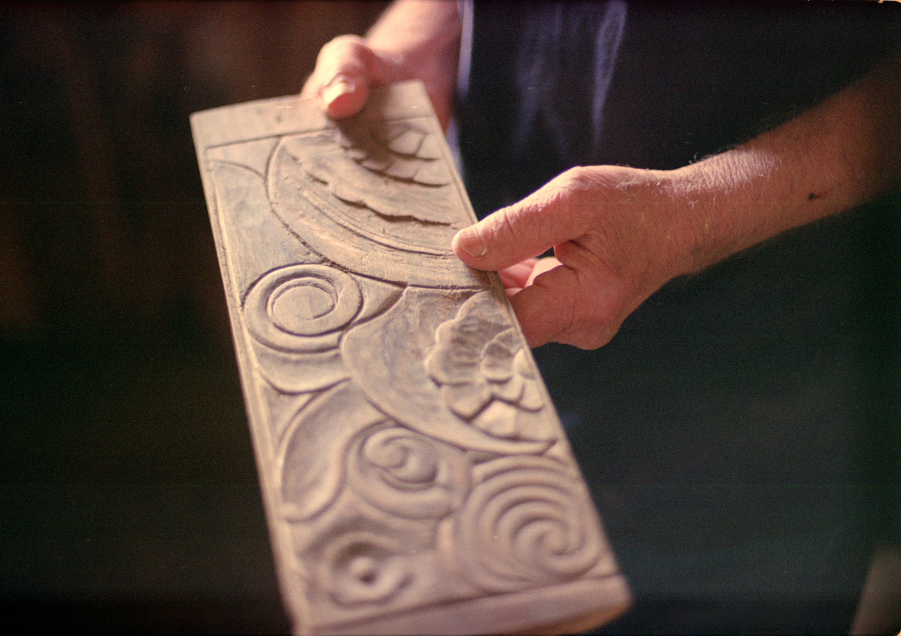
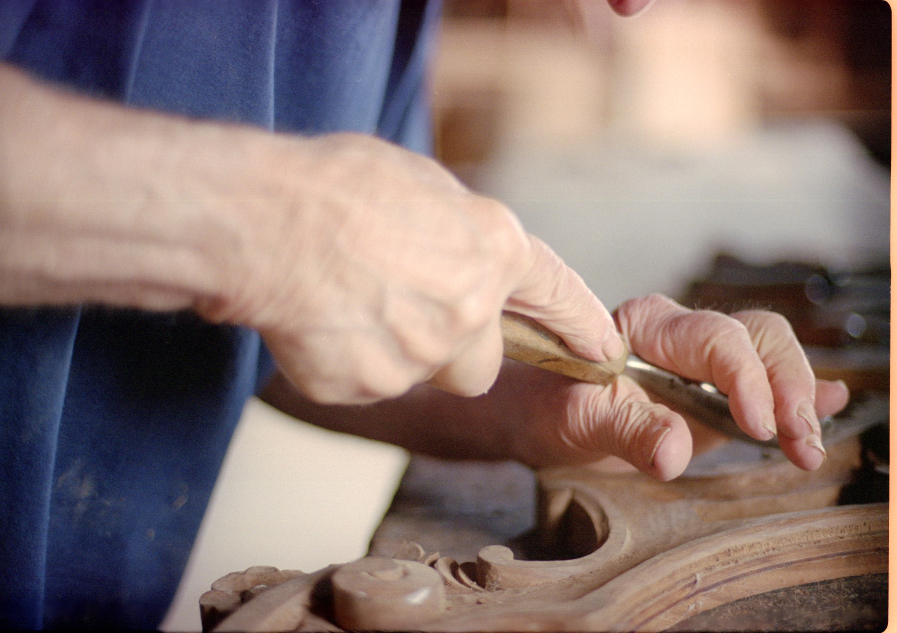
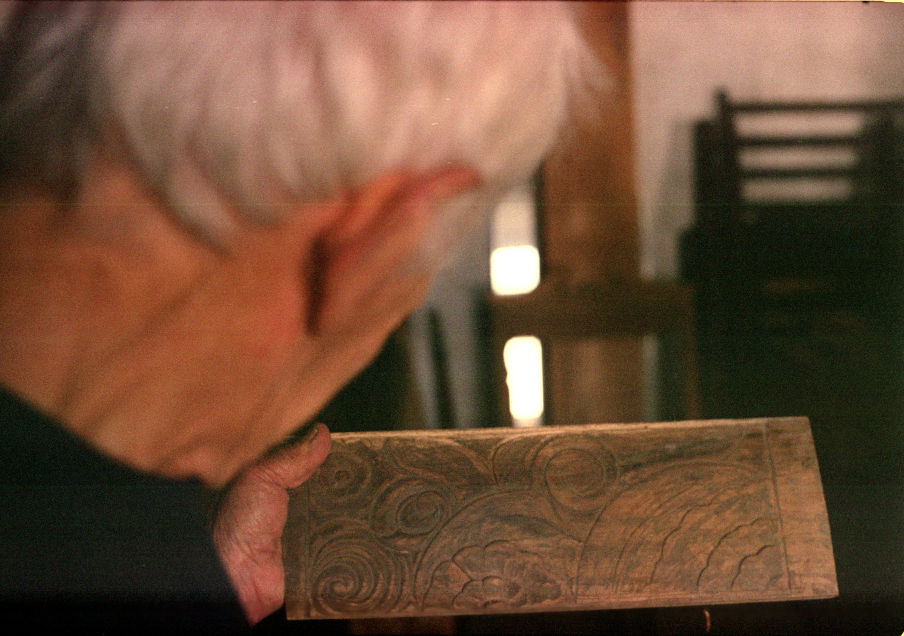


Domingos Melo. São Brás, São Miguel, Azores. 2019 © Jorge Murteira. All rights reserved. Courtesy of the Ribeira Grande Welcome Center.
Domingos’s father had been a carpenter — a maker of farming tools and wooden boxes for Gorreana tea, bound for export.
He started very young.
He was very meticulous in his craft.
He was the one who taught the boy, handing down tools one by one, as he could, as they became needed.
As a child, Domingos might have attended the Industrial School, but home’s hardships made it impossible. And so the workshop became his school, his father his Master:
He went on to teach three sons.
The first workshop he opened will now be the last to close.
He taught many. They were all good.
Now, of all those who learned from him, I’m the only one still alive.

THE LOUIS XV CHAIR
He never cared for taverns.
Back then, there was nowhere else to go.
No television.
None of the distractions we know today.
So, on Sundays, after Mass, he entertained himself in the workshop.
Let’s see if I can manage this.
As he grew into the craft of carpentry, his heart leaned toward restoration. That was what he loved most.
For a while, in secret, every Monday he carried a straw-seated Louis XV chair from the church into his workshop. At night, in silence, he would practice, learning how to restore it without being seen. By Saturday morning, before Mass, he would slip it back, so no one would notice its absence.
When I filmed him six years ago, he was still restoring. He showed me, with pride, a piece from an altar more than 300 years old. Always insistent on doing things well. Always ready to help others, as his father and the Masters before him had done.

WISE MASTERS
He told me of the time, long ago, when he sought out an old craftsman near Ponta Delgada — a Master who had already stopped working — to ask if he might buy his tools. He learned that the man’s family still knew how to use them. Yet even so, the Master gave him a few tools that might serve him.
What Domingos speaks of is sharing. But also of complicity. Of reciprocity. Of the need to pass on what one has gathered, so it doesn’t end, but continues in the hands of others. With dedication. With passion. And, as my own father would say, as a learning man with conviction, with determination, with integrity.
That conversation with the old Master, of course, was about far more than the fate of chisels. And Domingos never forgot it. He told me so himself.
RECIPROCITY… IN THE CHEST
While editing material for the Welcome Center, I revisited our meeting. And I kept aside this particular excerpt, sending it — untouched — to my friend Álbio Nascimento with whom I’ve been weaving paths through the crafts for a decade and a half, since the TASA- Ancestral Techniques, Contemporary Solutions
Now, six years after that first sharing, in 2025, Álbio asked me for the video again. He told me he wanted to show it during a talk in Barcelona, at the 4th Professional Craft Congress on The Transmission and Continuity of Knowledge in Arts and Crafts.
So I went back to the “chest” to search for it. And there it was.


Workshop of Domingos Melo. São Brás, São Miguel, Azores. 2019 © Jorge Murteira. All rights reserved. Courtesy of the Ribeira Grande Welcome Center.
TO GIVE, TO RECEIVE, TO RETURN
When you need something,
even at my age,
I will explain it to you…
At this crossroads of knowledge transmission, Domingos Melo reminded me of a work that deeply influenced me during my Anthropology studies: The Gift by Marcel Mauss (1923–24). In it, Mauss compares different systems of exchange in Polynesia, Melanesia, and the American Northwest Coast. From these contexts, he draws out a common underlying principle: the logic of the gift — giving, receiving, and reciprocating — a logic he also finds within Western societies.
Within this process lies an obligation to return, carrying something of the giver: the hau — the spirit of the “thing,” as understood by the Maori of Polynesia — or the symbolic “mark” inscribed in the gift, woven into a cycle of reciprocity that progressively expands across space and time.

As I said before, the delightful story that Domingos shared with me ended up embracing an “old” companion of these journeys. It was Álbio who recognized the value of that record, who honored the continuity of giving, receiving, and returning — between two Masters of the craft, Domingos and Manuel.
Without his reminder, Domingos Melo’s testimony might not have seen the light of day so soon.
Complicities and reciprocities of immeasurable worth !