
In September 1991, I travelled to the roof of the world. Along with a group of anthropologists, I retraced part of a journey undertaken by two Portuguese Jesuit missionaries who, in the first half of the 17th century, set out from Hoogly, on the Bay of Bengal, and reached Gyantse and Xigatze in Tibet.
Like Estevão Cacella (1585–1630) and João Cabral (1599–1669), who arrived there in 1627 and 1628 respectively, other Jesuit missionaries embarked in search of a Christian kingdom they believed existed beyond the Himalayas: Cathay.

The first among them was Bento de Goes, who departed from Goa in 1602, crossed Central Asia, and reached Suzhou, a city in China’s Jiangsu province, in 1606. He died there a year later, having demonstrated after four years of travel that the Kingdom of Cathay and the Kingdom of China were, in fact, one and the same.

But the quest for Cathay continued. Beyond the reading of João Cabral and Estevão Cacella’s letter – which inspired our own journey – I recommend learning about Bento de Goes’ expedition. Since the original manuscripts have been lost, it is now known to us through the writing of a contemporary Jesuit: Father Matteo Ricci (1552–1610).
For those unfamiliar with it, I recommend Journeys in Central Asia in Search of Cathay: Bento de Goes and António de Andrade.
Our journey aimed to retrace the path followed by Estevão Cacella and João Cabral as part of the pre-production of a documentary on their expedition. I filmed and edited a video entitled Itinerários do Oriente (“Itineraries of the East”). The project was supported by the National Commission for the Commemoration of the Portuguese Discoveries.


In issue no. 12 of the magazine Oceanos, titled The Jesuits and an Idea of Portugal, an article by Rosa Maria Perez was published: A 17th-Century Adventure: Portuguese Jesuits in the Himalayas (1992). She coordinated the team, which included Filipe Verde and João Matias.

Reading these travel accounts is striking for several reasons. First and foremost, because these missionaries had extraordinary motivation to undertake such journeys under harsh and often grueling conditions. At times, they faced extreme adversity and even life-threatening situations.

I remember clearly how, during our journey, we discussed how these Jesuits were, in a way, pioneers of what would later become anthropology. Their openness to cultural mediation was an ever-present challenge, even in the way they dressed, to remain unnoticed, to negotiate, or to build relationships with the people they encountered
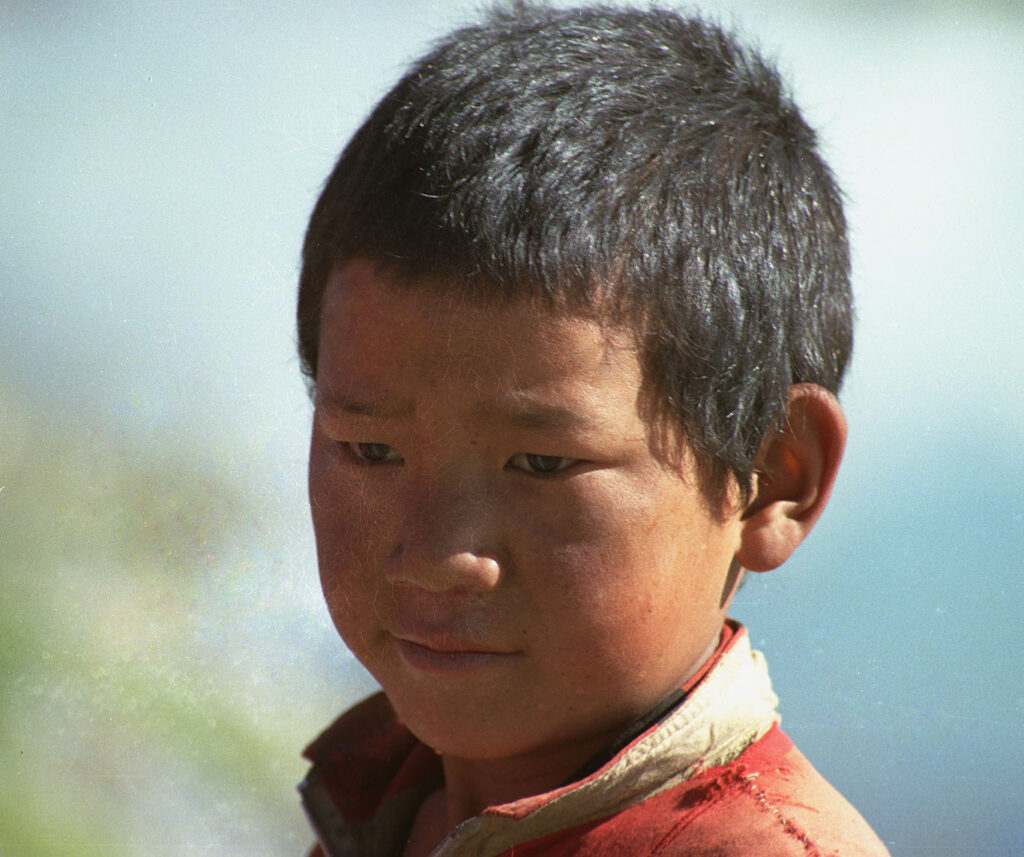
To reach Tibet, we had to enter through China, which occupied the territory in 1951. From Hong Kong, we made stops in Beijing and Chengdu before finally landing in Lhasa – “the Place of the Gods” in Tibetan.
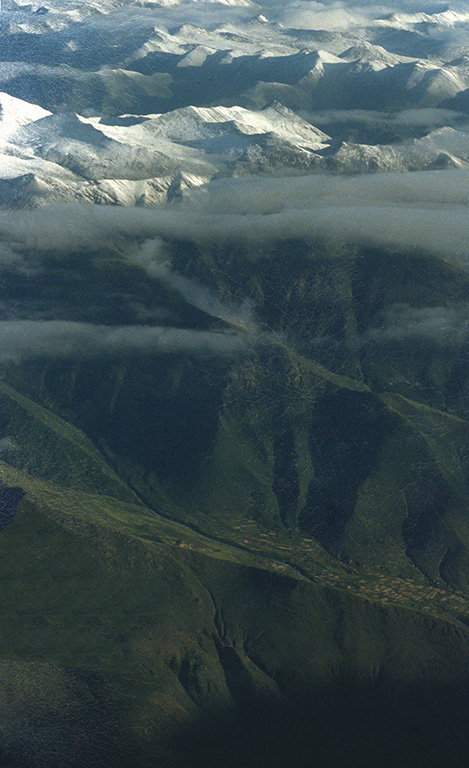
The approach to the city follows an endless valley flanked by two high mountain ranges that seem to continue right up to landing. Lhasa is one of the highest cities in the world, at an altitude of around 3,600 metres.

When I arrived in Lhasa, I felt, more than anywhere else, that I was literally in another world. Not only because of the power of the landscape, but also because all my senses were awakened to sensations I had never experienced before. Even breathing was different, given the thinner air at this altitude. I tired more easily and slept in a way that felt unfamiliar.
In addition to the effects of altitude on the body, the landscapes of the valleys, mountains, vast lakes, and the sounds one encounters – from monasteries and monks to streets and markets – remain etched in the memory for life.

On the journey from Lhasa to Gyantse, we crossed the sacred lake Yamdrok Yumtso, passing over the Gampa Pass, which sits at 5,000 metres above sea level. We were among the highest mountain ranges on Earth. Adapting to the altitude in areas close to the snow line is not easy. Even minimal effort left one breathless.


Departing for Kathmandu, the Chinese airline captain announced we were crossing into Nepal and added that the peak visible among the clouds at the centre of the mountains was Everest.

Even from within the airplane, seeing the world’s highest peak right in front of us was unforgettable – as was the entire journey, which continued through Nepal, Bangladesh, and India.
