
FROM AFAR THIS ISLAND SEEMS SMALL (popular song)
From afar this island seems small.
This island is vast.
It has a long history,
from its people to its monuments.
It is not possible for us to tell you everything we have,
For there are others who also wish to speak to you.
If you still wish to hear something from our people,
Stay a long time on this Island.
Then they would show you the street of fire
Where you have never set foot.
(free version by Nelson Saúte e António Sopa) in “Ilha de todos – Ilha de Moçambique”; Oceanos, n.25 – January to March 1996
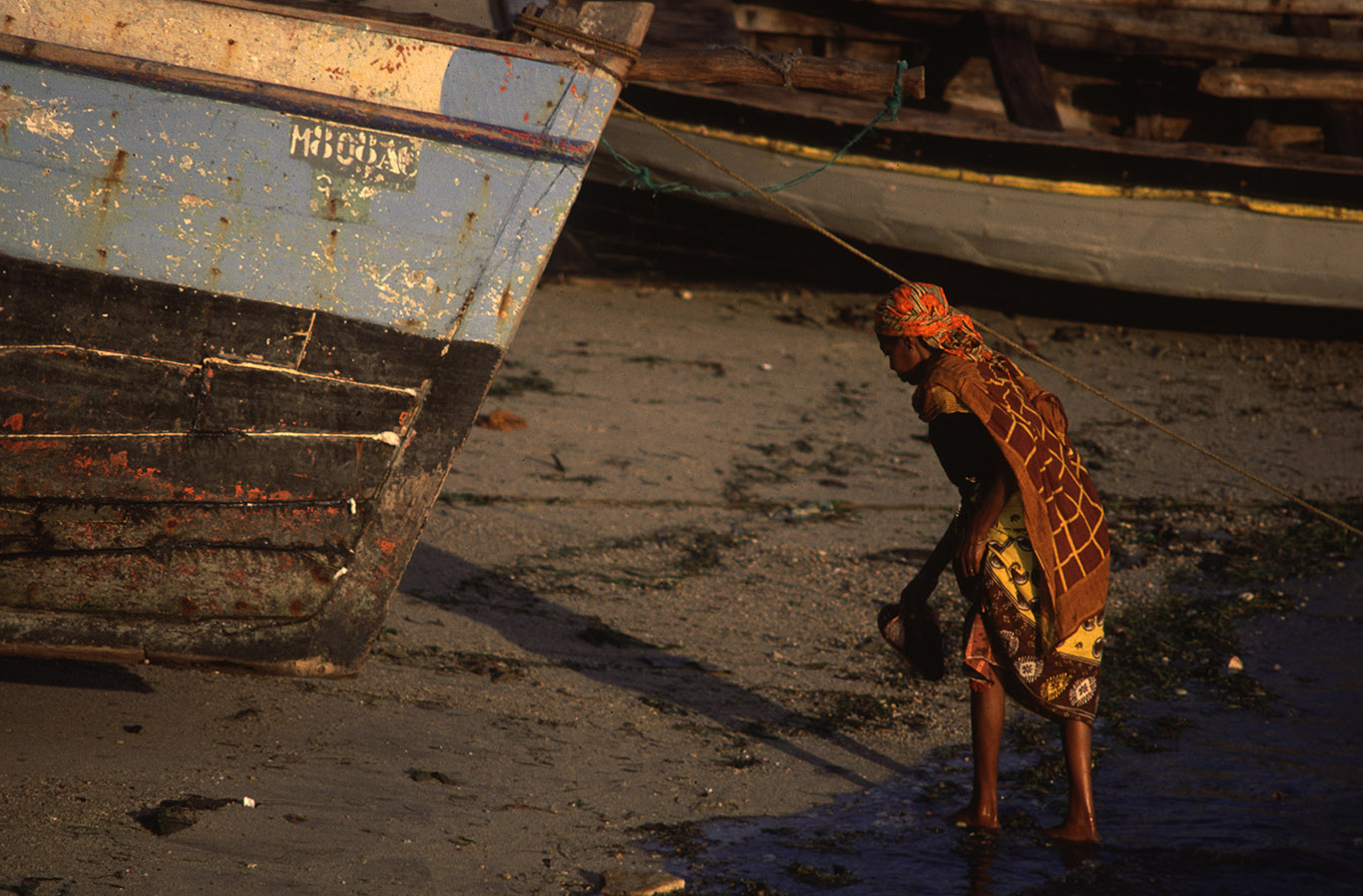
It is said on the Island of Mozambique that in a distant past, an indigenous fisherman named Muhípiti settled there. He supposedly passed on governance to M’biki, who in turn handed it to his son, named Moussa, who ruled until the arrival of the Portuguese at the beginning of the 16th century. The island’s name is said to have come from this legacy: “those who rule here are from Moussa M’biki!”
Long before the Portuguese arrived and settled, the island maintained a link between African Bantu peoples and peoples of Arab, Persian, and Indian origin. From this exchange, much of what is now northern Mozambique and the eastern coast of Africa came to be inhabited predominantly by Swahili populations, scattered in small settlements along the shoreline, almost up to present-day southern Somalia.
When the Portuguese settled there, the Island of Mozambique was a stop on the gold trade route, where ships from India arrived to exchange textiles for gold and ivory.
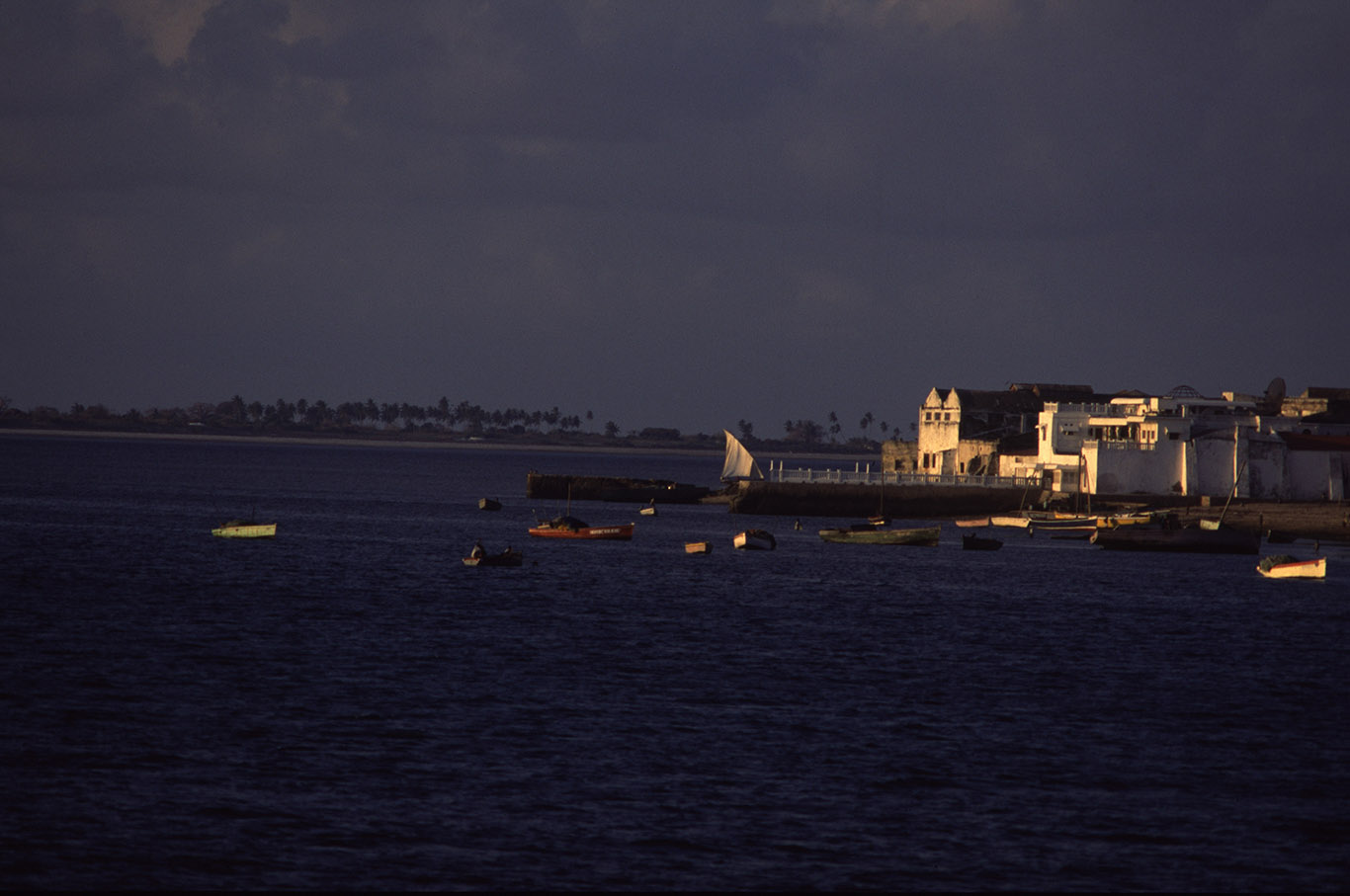
The period of Portuguese hegemony sought to dominate navigation in the region and gain, through military force, a monopoly over Eastern trade. This led to a relationship of conflict and tension with the Muslim traders who roamed the East African coast. From that point on, the Island of Mozambique emerged as a commercial outpost, administrative center, and port of call for the “India Run” (Carreira da Índia).
In other regions along the East African coast, the Portuguese were progressively expelled by Muslims, as happened in Zanzibar and Pate Island.

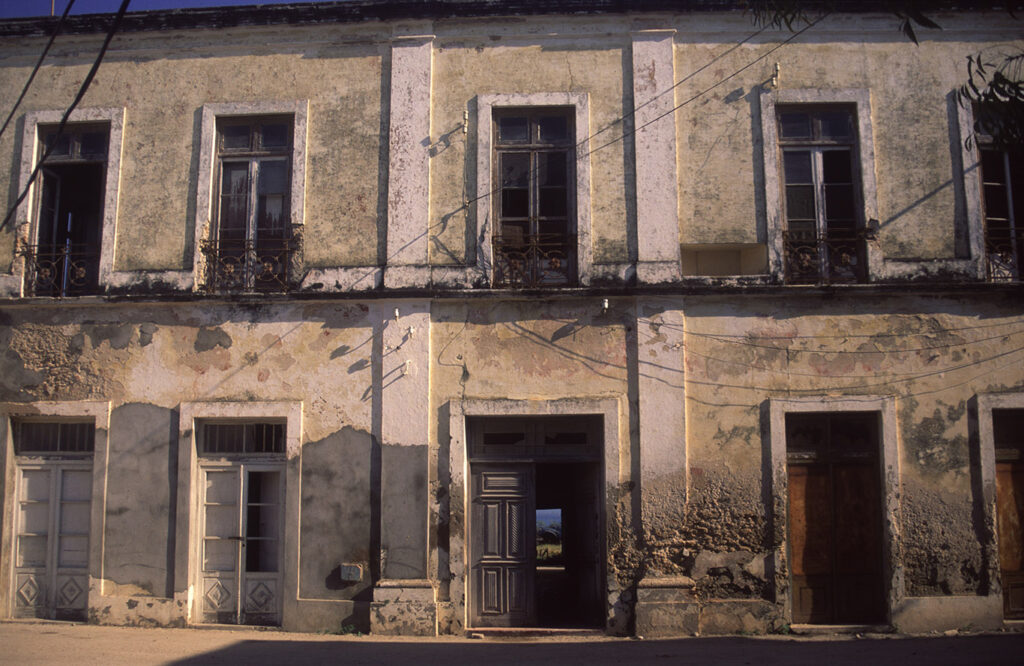


RETURNING TO THE ISLAND OF MOZAMBIQUE
I visited the Island of Mozambique on three different occasions. First, in 1996, during the photographic campaign accompanied by Francisco Leal, who recorded the sound, for the exhibition “Cultures of the Indian Ocean”. This exhibition, held in May 1998 to mark the 500th anniversary of Vasco da Gama’s voyage to India, took place at the National Museum of Ancient Art and was promoted by the National Commission for the Portuguese Discoveries.


Several years later, in September 2001, just days after the attacks on the World Trade Center, I had the opportunity to return to the Island. The Commission was concluding its participation in a project part of the Cultures of the Indian Ocean program, with the handover of the exhibition Macua Fishermen by José Henriques e Silva to the Historical Archive of Mozambique. In Nacala, more specifically in Naharenque, the exhibition was set up, visited by some of the very individuals photographed by José Henriques e Silva half a century earlier.
Finally, in 2008, I filmed and edited a documentary as part of an international consultancy project promoted by CESO: the Integrated Development Plan for the Island of Mozambique.


When I said earlier that I “passed through,” that’s exactly what it was. Not because I remained indifferent — quite the opposite — but because I became increasingly aware that the fascination and allure I felt stemmed from a naïve and perhaps even selfish perception of what the Island of Mozambique truly is.
It’s easy to feel captivated by the many forms of coexistence found there. But beyond that enchantment, there are also tensions, conflicts, and precarious situations, not only experienced by those who live on the island but also by those who come and go. The periods of crisis and uncertainty, of domination, confrontation, and exploitation, were, as we know, built up over centuries and are part of the complex history of this small yet diverse space.


This life unfolds and pulses in the stone-and-lime city, among colonial-era buildings, in close proximity to the macuti town, where most of the population lives, just next door — vibrant and bustling — sparking the urge in me to understand what lies beneath the surface.
Yes, we can read. But to stay is another matter entirely. To converse in order to learn. To feel. Especially because, as I mentioned earlier, the island is not isolated from the continent — only a few kilometers away — from where so many people arrive and depart each day.


That’s why I always feel like staying longer whenever I’m there. So, for now, I remain with the captured moment, the photograph. Which, in some cases here, may let us immerse ourselves in the soundscapes that Francisco Leal recorded.
IN SEARCH, AT LOW TIDE

In front of Makuti City, the low tide stretches the beach all the way to the Fort of Saint Anthony.


In the hustle and bustle of the Island of Mozambique, two children walk by the sea, as if the older one were searching for something. What was it?
I left without knowing. At the time, I didn’t seek the answer, probably because I thought I had something more important to do. And so the doubt remained. Like so many others I wish I had understood better on the Island of Mozambique, even after visiting three times.

