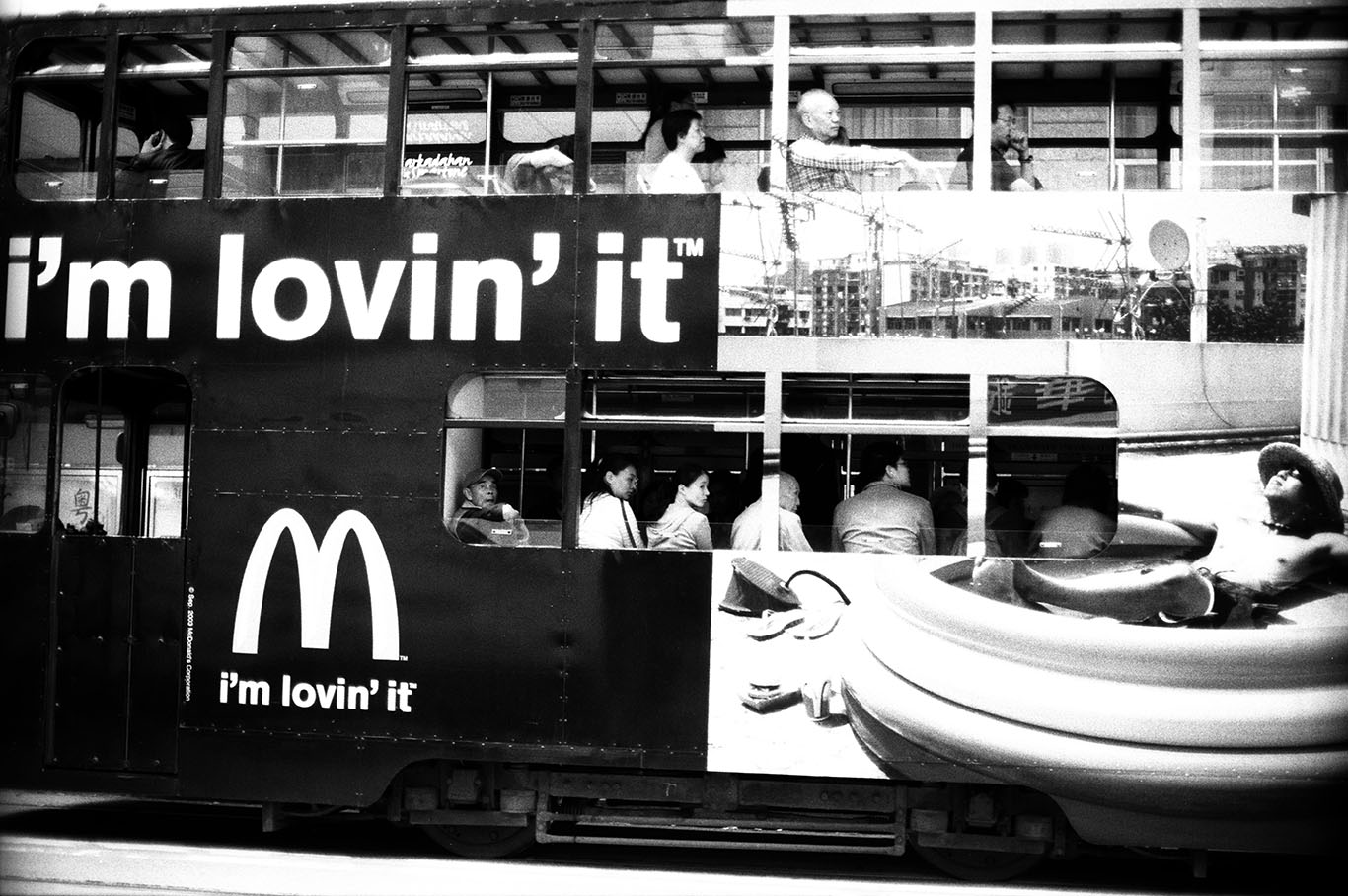
Hong Kong is currently the fourth most densely populated territory in the world. The whirlwind of people and the constant traffic flow resemble a high-speed ant colony. It’s a permanent hustle and bustle that unfolds among towering buildings where, at the turn of a corner, unexpected and fantastic scenes emerge.
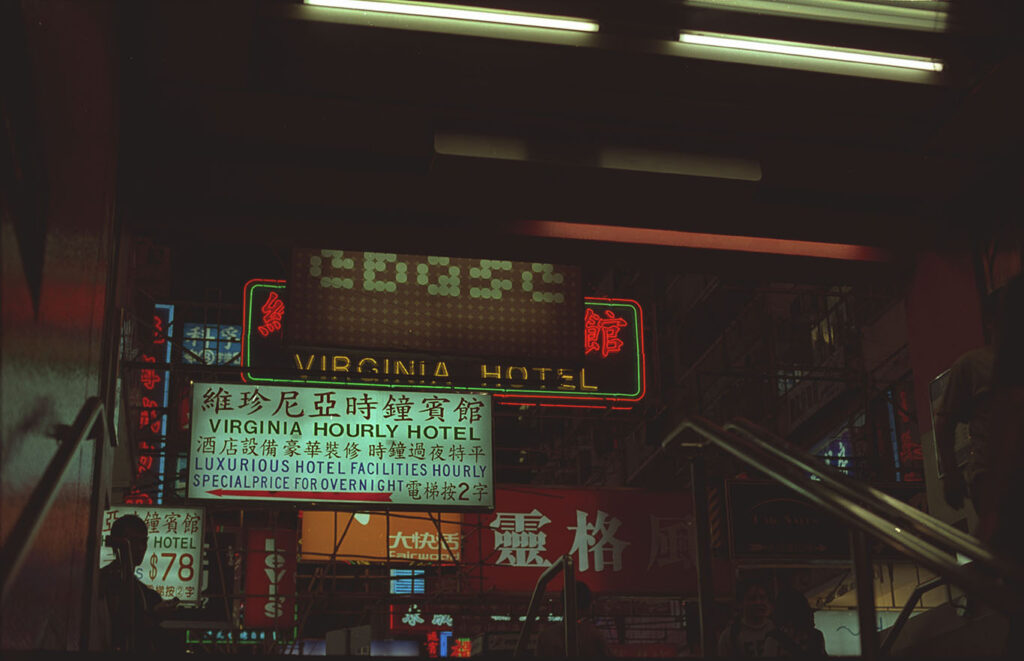
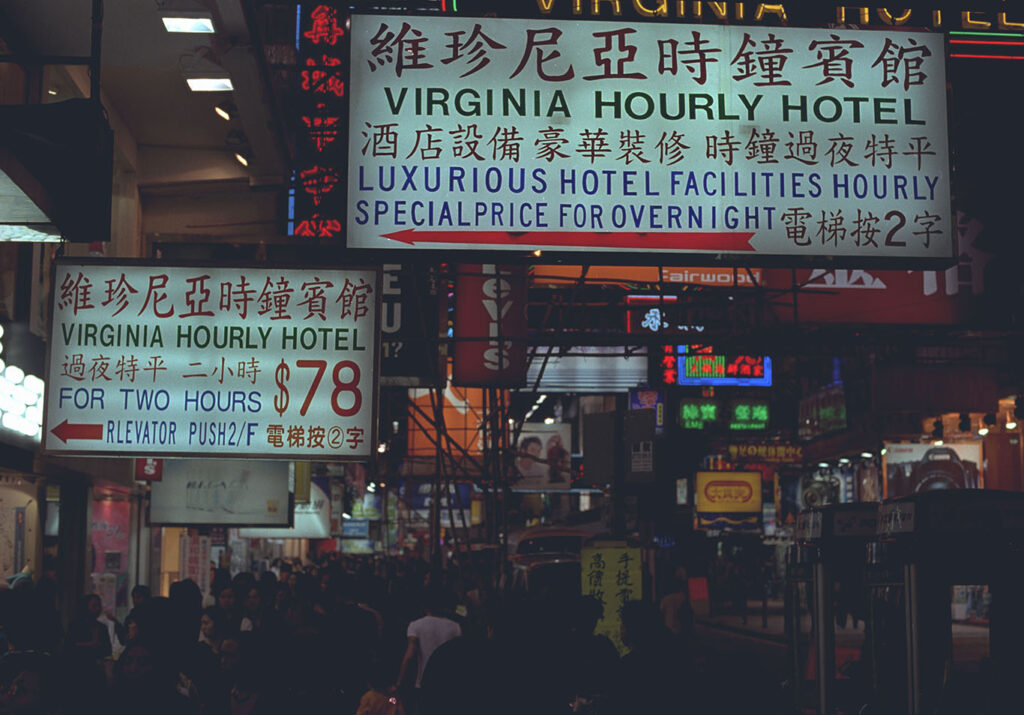
The physical limitations to expansion challenge creativity—especially when it comes to finding space for those who live or work there, and even for those who visit. To accommodate everyone, the beds barely have time to cool down. For just a couple of hours, it’s possible to rent a room at bargain prices to rest or enjoy some moments of pleasure with a temporary companion.
But there are also “non-places.” These are shaped by those who escape the collective frenzy. A moment to stop and reflect on life?
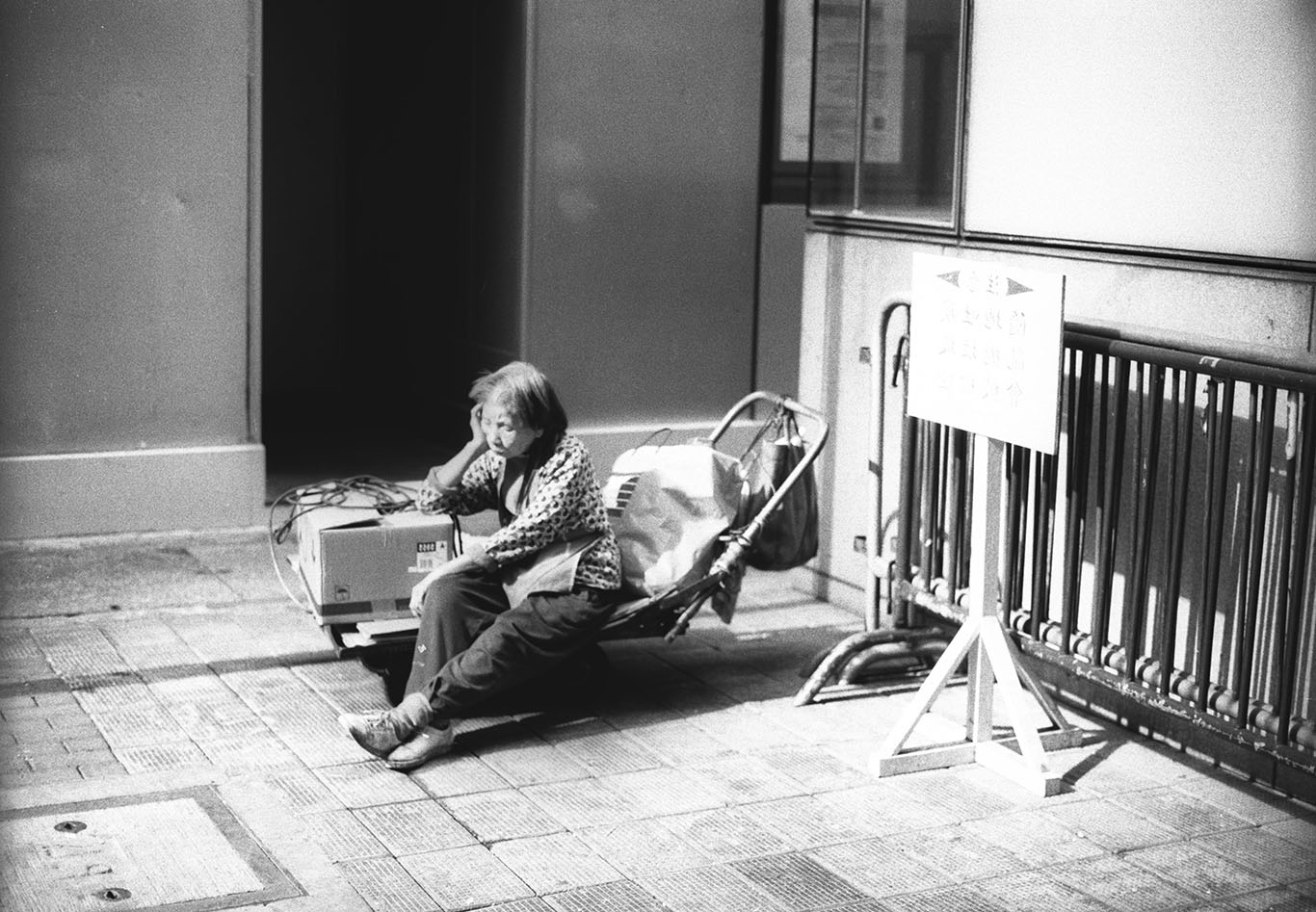
Or to fall asleep, unashamedly, in plain sight of passersby.

Hong Kong is believed to have derived its name from the aromas of agarwood and incense once traded there. Literally translated, it means “Fragrant Harbour.” The harbour’s charms are now different. Taking a night ferry out to sea and observing, from a distance, the massive urban sprawl stretching across the horizon and rising skyward without limit, gave me a new perspective on this urban colossus that seems to know how to adapt to everything and everyone.
That first night I spent there felt as if I had landed on another planet—a different time I couldn’t describe or classify. As seductive as it was, I felt that place as distant. I could never live in such a place.
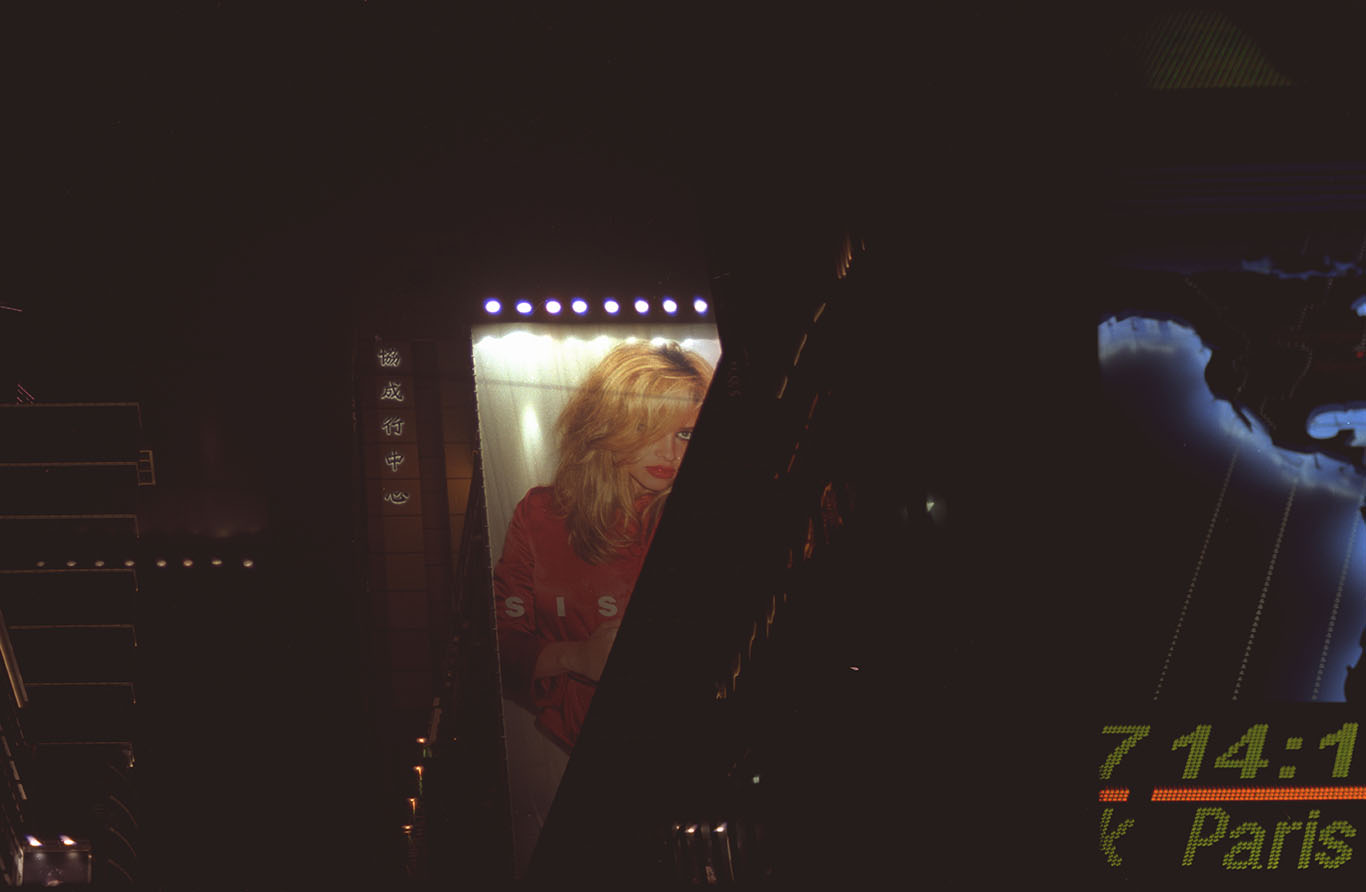
THE TRANSITION FOR “ONE COUNTRY, TWO SYSTEMS”
During my two visits to Hong Kong, in 1991 and 2004, the territory was governed by two different powers: first by the United Kingdom and, a little later, by China.
They were brief visits, leaving little time to see much. The first time, we stayed only one night. We arrived from London on a British Airways Jumbo jet that was rerouted away from Iraq due to the Gulf War. As an alternative, it flew over much of Russian territory—a flight that lasted over 12 hours.
With only one runway, the old international airport was considered one of the most dangerous in the world. Nestled among the hills surrounding the built-up area, the approach involved a sharp turn to begin the final descent.
We flew down between skyscrapers that loomed uncomfortably close. In that controlled near-miss, until we touched down, the buildings seemed to grow taller, their upper floors vanishing from the horizon visible through the plane window.
That was the first impact upon arrival—and the first deep breath, too.

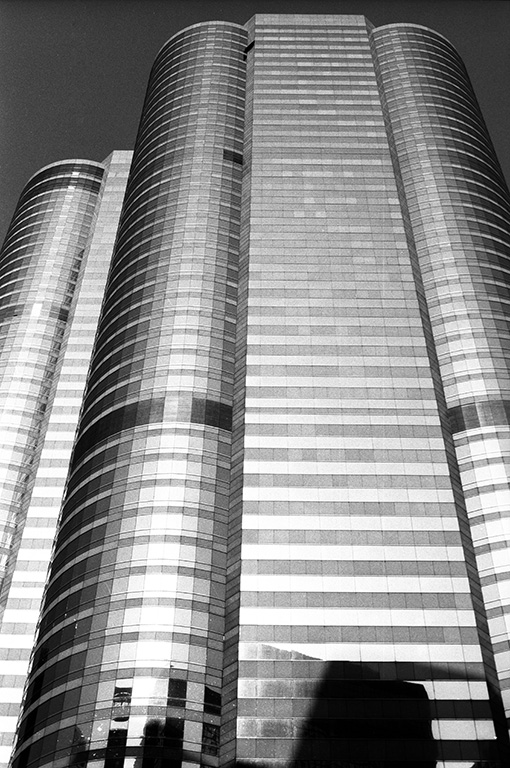

The next day, we flew to Beijing on a China Airlines flight. Another stopover on the way to the rooftop of the world. At the time, Chinese authorities only allowed foreigners to enter Tibet from the capital.
Looking back, that decade was moving toward the end of British rule over the territory, while China continued its ascent to assert itself increasingly on the global stage. I now see those two flights as suggestive of an era that would leave lasting marks.
Hong Kong’s integration into the People’s Republic of China was completed in 1997. Two years later, the same happened with Macau. And so, in the East, in these two nearby territories, the symbolic end of the British and Portuguese colonial empires took place at the close of the 20th century.


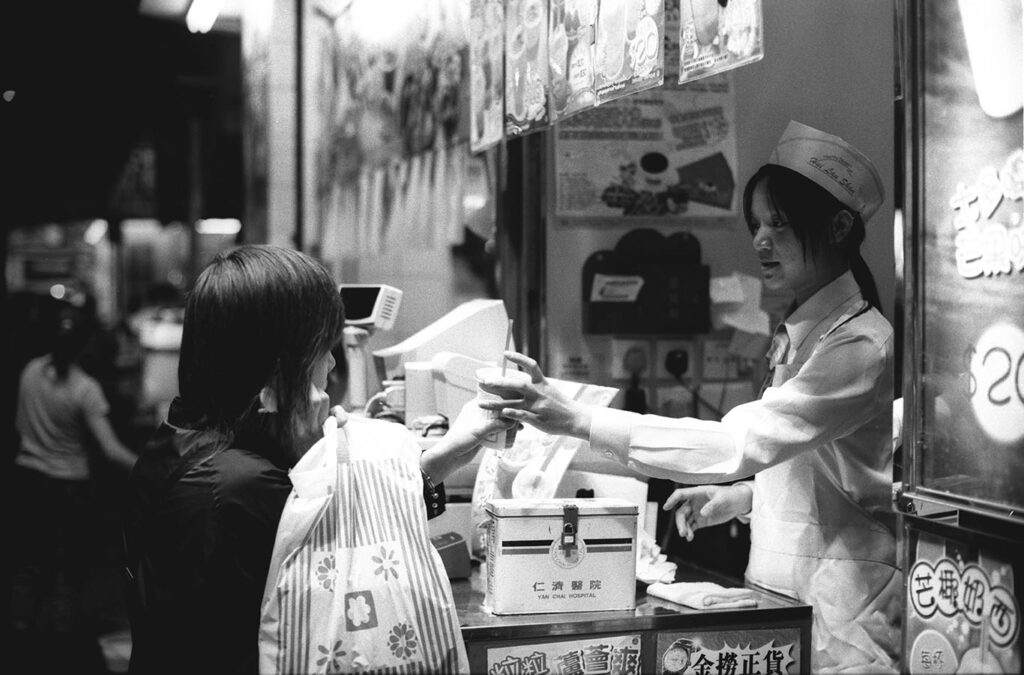


Hong Kong. 1991 © Jorge Murteira. Todos os direitos reservados.
China was governed by Deng Xiaoping’s pragmatic policy, implemented from the late 1970s. I’m referring to the creation of the so-called Special Economic Zones (SEZs). Anticipating the integration of Hong Kong and Macau, the first SEZ was created just next door, in Shenzhen. This paved the way for what would become known as “One Country, Two Systems.”
The plan was that for 50 years after their integration into China, both territories would maintain administrative autonomy, an independent judicial system, freedom of the press, their own currencies, and a so-called “capitalist” economy. As one might expect, what actually happened didn’t quite follow the terms of those agreements.


FOOLING ME WITH THE TRUTH…
Upon arriving in Beijing, after a visit to the Forbidden City and Tiananmen Square—where, two years earlier, student protests had been violently suppressed—a Chinese tour guide assured us that China would never fall into the trap that the Russians had stumbled into in the late 1980s.

He was referring to Gorbachev, who launched a series of economic reforms to “modernize” the Soviet system, historically known as Perestroika. At the same time, with Glasnost, he allowed for a political opening of the regime to increase civic participation and reduce corruption. According to the Chinese guide, the economic reforms led to disorganization in the planned economy and a prolonged period of crisis and uncertainty, while the political opening encouraged nationalism and growing criticism of the regime, ultimately resulting in deep instability, the fall of the Communist Party, and the collapse of the Soviet Union.
He explained further: economic reforms must be implemented with a strong political structure, or the regime could be undermined and collapse. By the end of that same year, Gorbachev’s resignation would confirm what the guide saw as a cautionary tale—a transition China was determined to avoid.

In Hong Kong, repression has been increasing in an effort to control a growing wave of protests. The dissent mainly denounces laws that restrict civil liberties. Halfway through the planned transition period, the agreements seem to belong to the past…
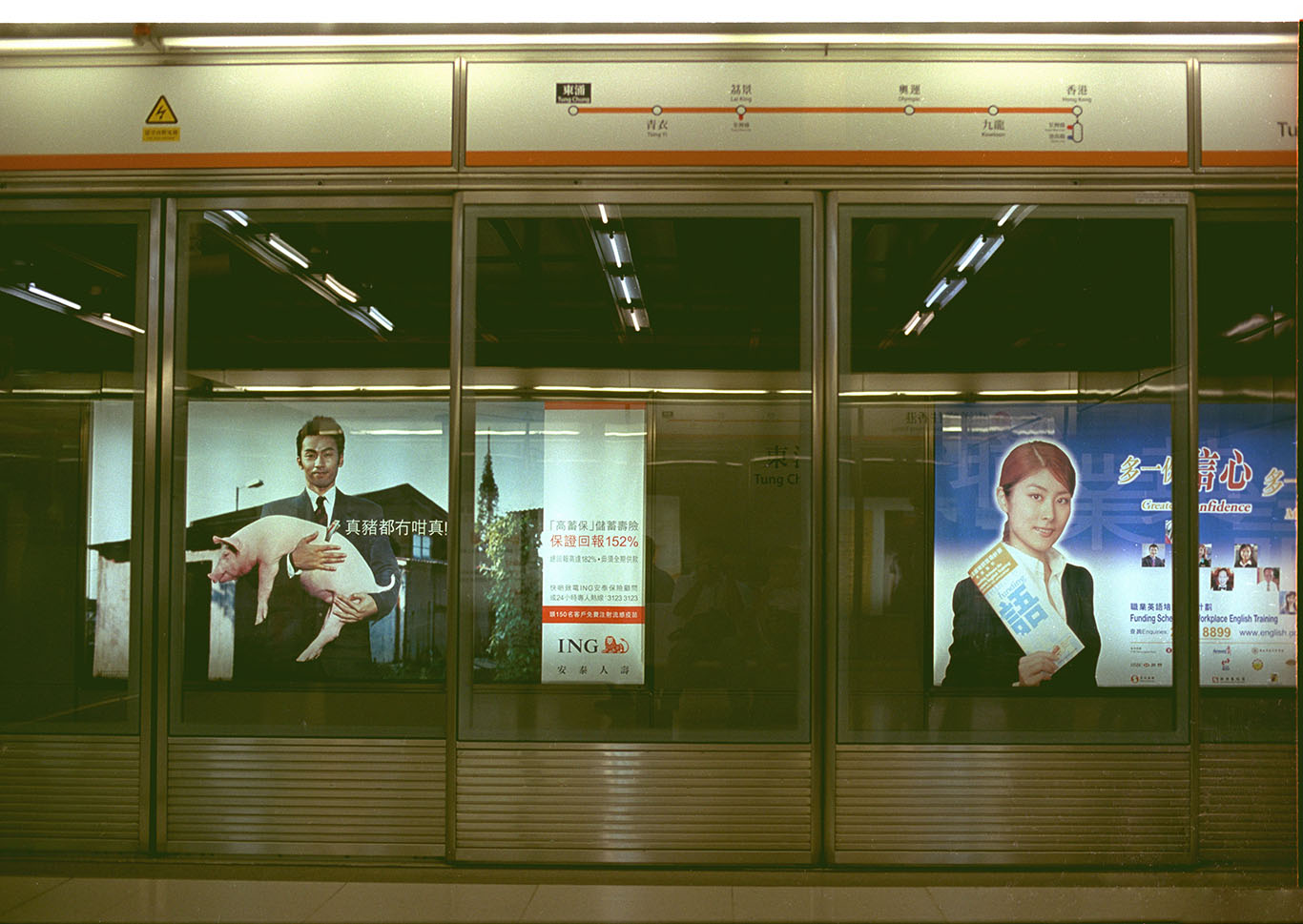
And China, led by the Chinese Communist Party, continues on its path—an extended marathon that will likely make it the world’s largest economic power within one or two decades.
Here, as over there, as the saying goes, you fool me with the truth…