
With nearly two centuries of history, the Robinson cork factory shut down in 2009. The documentary begins during the final phase of the factory’s operation. Despite months of unpaid wages, the workers remained active, trying to keep it going. But their efforts were in vain.
Following some of the workers after the closure, the film reveals the memory and daily life of those left unemployed, unsure of what tomorrow might bring.
It confronts us with the impact of the end of an industrial era—of a society that discards people when it no longer sees any use in them.
STARTING POINT
The initial challenge was proposed to me in 2005 by the Robinson Foundation, specifically by Professor António Camões Gouveia. The goal was to document the memory of the factory workers, their relationship with the machines, and the social life that existed both within and beyond the factory walls.
The purpose of this collection—besides the documentary—was to create a video archive for the museum that was planned to be established in the factory site.

The aim was to understand the workers’ connection with the machines and the factory: their knowledge, routines, professional paths, spatial circulation, and experiences, whether successful or not.
It was also about reflecting my own perspective on this troubled period in the factory’s history, considering the women and men who had spent most of their lives there and saw their futures threatened by the shutdown.
INSIDE THE FACTORY: THE “BLACK” SECTION
It took two years to obtain permission to film inside the factory. The Robinson Foundation sought to create the necessary conditions for video documentation of the workers’ memories and the factory’s final operations. However, the factory’s management firmly opposed any filming.
As a result, filming began outside the facility, only with former workers. The ones still working were afraid of retaliation and declined to participate.

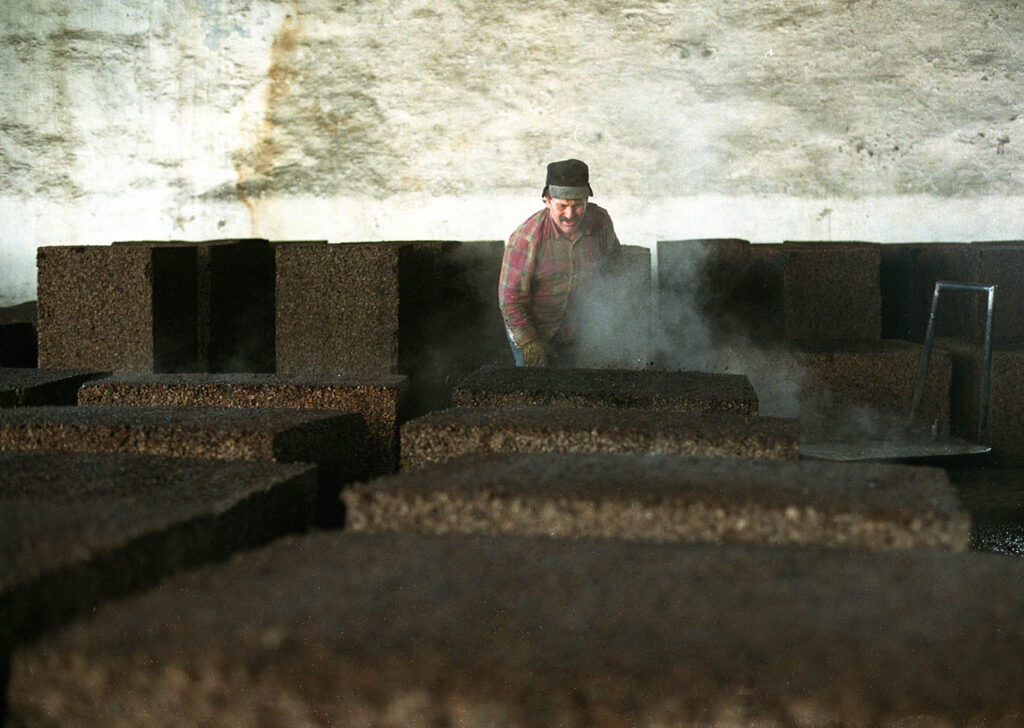
It was only close to the factory’s final closure that I was allowed to enter and film. Ironically, those who had once barred access were the ones who finally opened the doors—particularly to the “black section,” one of the few remaining areas where part of the production process could still be documented.
It was now evident that these images and sounds belonged to the heritage of Portalegre—not to private interests disconnected from what was truly at stake.

The production chain was fragmented. Work continued only through the coordinated effort of nearly all remaining workers—a tremendous effort that ultimately failed.
Many workers who had specialized roles within the chain could no longer endure unpaid wages and left. Others, either because they still believed in the project or had no other choice, stayed until the very end. Some even took their own lives shortly after the closure.
These were perhaps the most expressive scenes of the factory in operation. It was the swan song. Two weeks later, the factory closed for good.

A COLLECTIVE CHARACTER
One concern shared by the project leaders at the Robinson Foundation was to ensure a videographic survey that captured as many of the factory’s “actors” as possible.
Gaining the trust of participants was essential. Respecting their silence and slowly building a relationship through fragile initial contact made all the difference in the way the footage was captured. But time inside the factory was running out, and it became increasingly clear that there was little, if anything, to be done.

Beyond the workers, the factory itself was also part of this collective character. Multifaceted and ever-changing, it demanded constant adaptation from those connected to it—many of whom spent their entire lives there. Facing the threat of closure, they saw the meaning they’d long attached to the place slipping away.
This monastic space—originally a convent—became a stage for an industrial revolution. Its anachronism echoed in the play of light and shadow through the galleries, in the sound reverberations from the few remaining machines, in the near-silence broken only by animals who had made the site their home.
Among them was a dog named Falida (meaning “failed”), who became one of the film’s most striking characters:
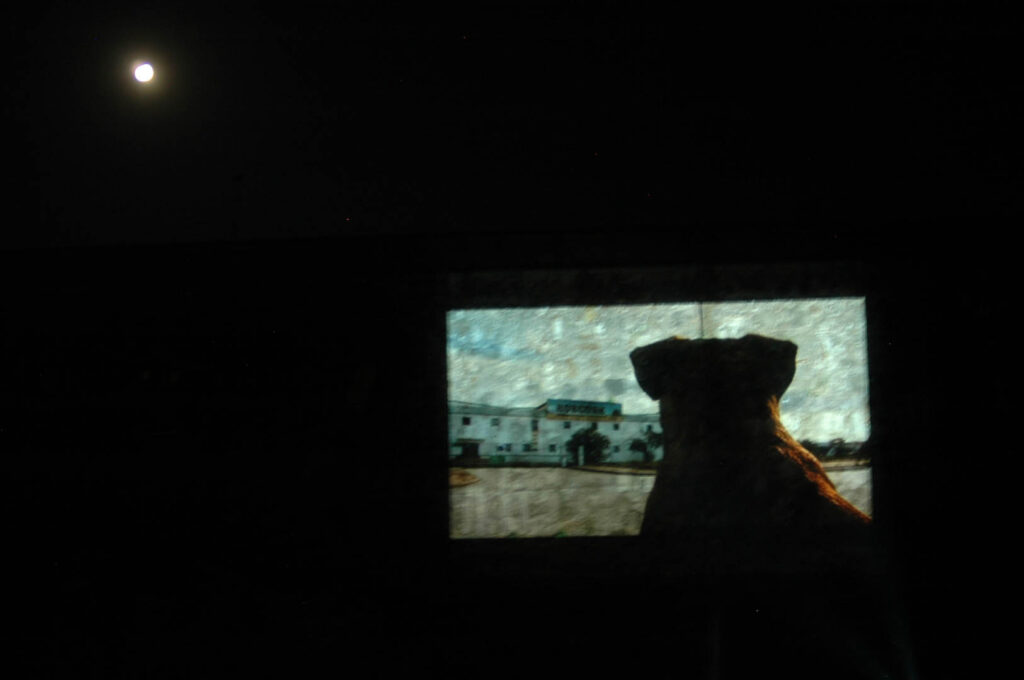
“(…) A few pets still roam this community, including Falida, who continues in vain to search for the factory where she was cherished and fed for years by the workers. We suspect she still possesses, in some way, a sense of class consciousness.”
This documentary by Jorge Murteira about the Robinson factory is thus more than a record of an old industrial site—it is a mirror of a timeless human condition, full of light and shadow, like the crumbling factory itself.

THE SOUNDS OF THE FACTORY
I also captured several soundscapes from the remaining factory operations:
// Autoclaves
// Factory siren
// Furnance
// Loading the furnance with wood
FOR THE RECORD

“This documentary, filmed in Portalegre in Northern Alentejo, is not limited to this city, this region, or even Portugal. It centers on men and women with specialized knowledge and practices who were suddenly left without work or any secure vision of their future.
(…) In these uncertain and changing times, the contribution of this film and its materials is also to ensure that the former Robinson factory workers are not forgotten. For the record.”
— Murteira, Jorge, “A Long Road Toward Future Memory,” in Publications of Fundação Robinson, no. 22, 2012, pp. 18–25.
You can acess here the publication about the documentary published by Fundação Robinson

ABOUT THE IDEIA NEVER WAVERS

In May 2024, I presented the documentary at the Cooperativa Operária Portalegrense.
The following day, a debate was held on “Social Innovation,” as part of the 5th Social Work Conference organized by the Polytechnic Institute of Portalegre.

The documentary was part of an ambitious project promoted by the Robinson Foundation and the Municipality of Portalegre, aiming to create a new central hub in the Robinson factory complex. Beyond a cork industry museum, the goal was to establish new cultural and service-oriented spaces. Today, little remains of those ambitions—except the Hospitality School, which is still in operation.

Some echoes of the debate we held there inspired an article by Abílio Amiguinho in Alentejo Ilustrado the following month.
