What I really wanted was to see the world!
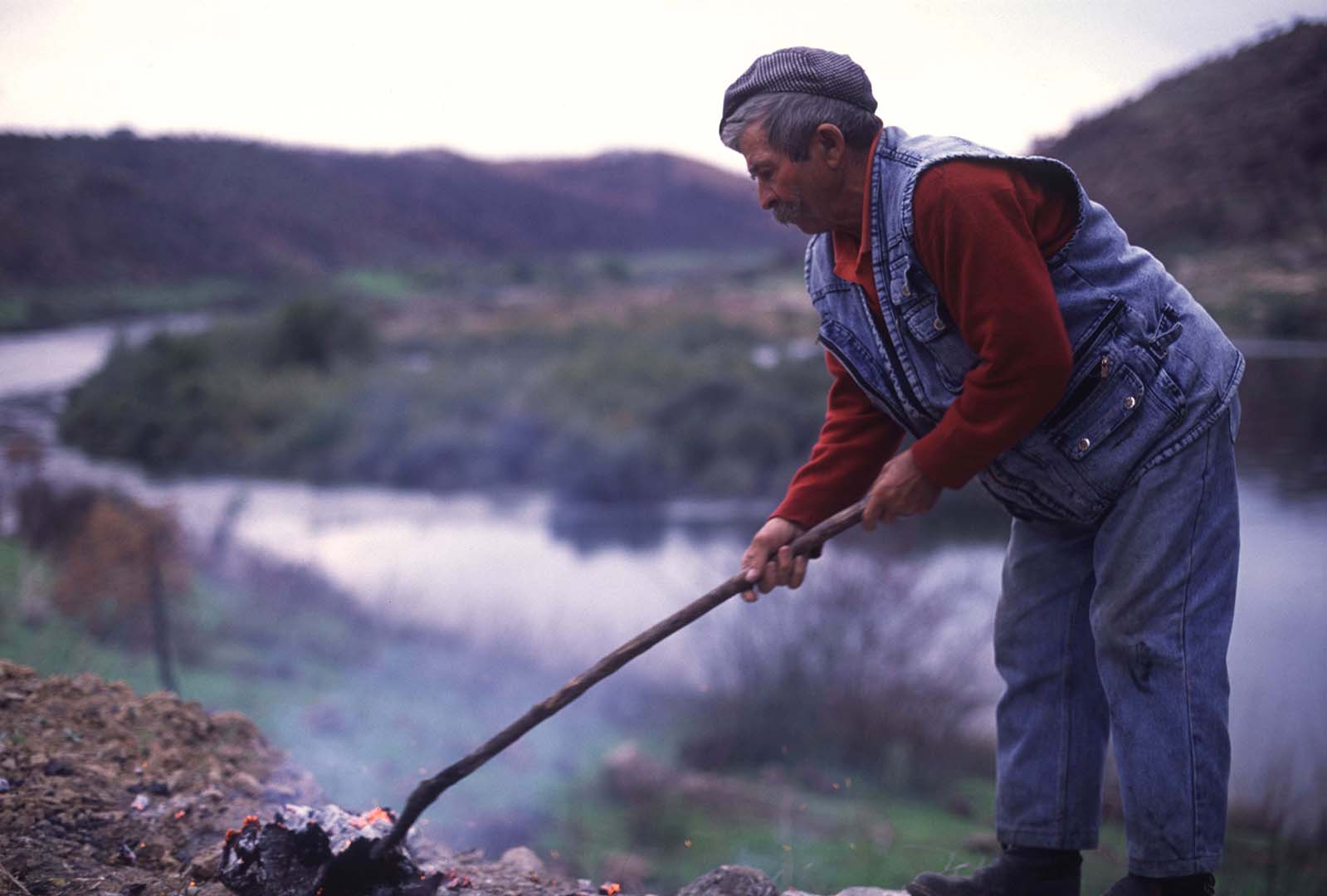
In Barca de Amieira, Paulino is the boatman who ensures the connection between the banks of the Tagus River. He turns the shack above the river into his makeshift home. There, he keeps a bit of everything, cooks, shaves and grooms his mustache, and takes shelter when the rain, cold, or wind become too much. He grumbles and pleads for a proper house.
The film follows the last boatman through all four seasons. In autumn and winter, near the fire in the valley of the river, waiting in a slow rhythm disrupted only by trains that rarely bring passengers. In spring and summer, sitting alone at a makeshift table, sharing a drink or snack with whoever might pass by. Until someone gets off the train or appears on the riverbank to be ferried across.
Now, there is no more Boatman, and the new house remains unused. There are no more crossings for anyone.
AND THERE I STAYED
More than what a man does when he guards the banks of a river he settled by around twenty years ago, I was interested in discovering who this person was. That’s why, having heard of the boatman, I went to Amieira do Tejo, drove down to the river, and introduced myself.
I was already thinking about making a documentary before I met him. Later, I ended up living nearby, in Amieira do Tejo, for more than a year.
I set off without knowing whether the documentary I had started—of which I had already gathered over twenty hours of footage—would actually materialize. The only boatman I had known was from Gil Vicente’s “Auto da Barca do Inferno.” I had imagined an ambivalent character—part Angel, part Devil—diligent and clever, and not much more.
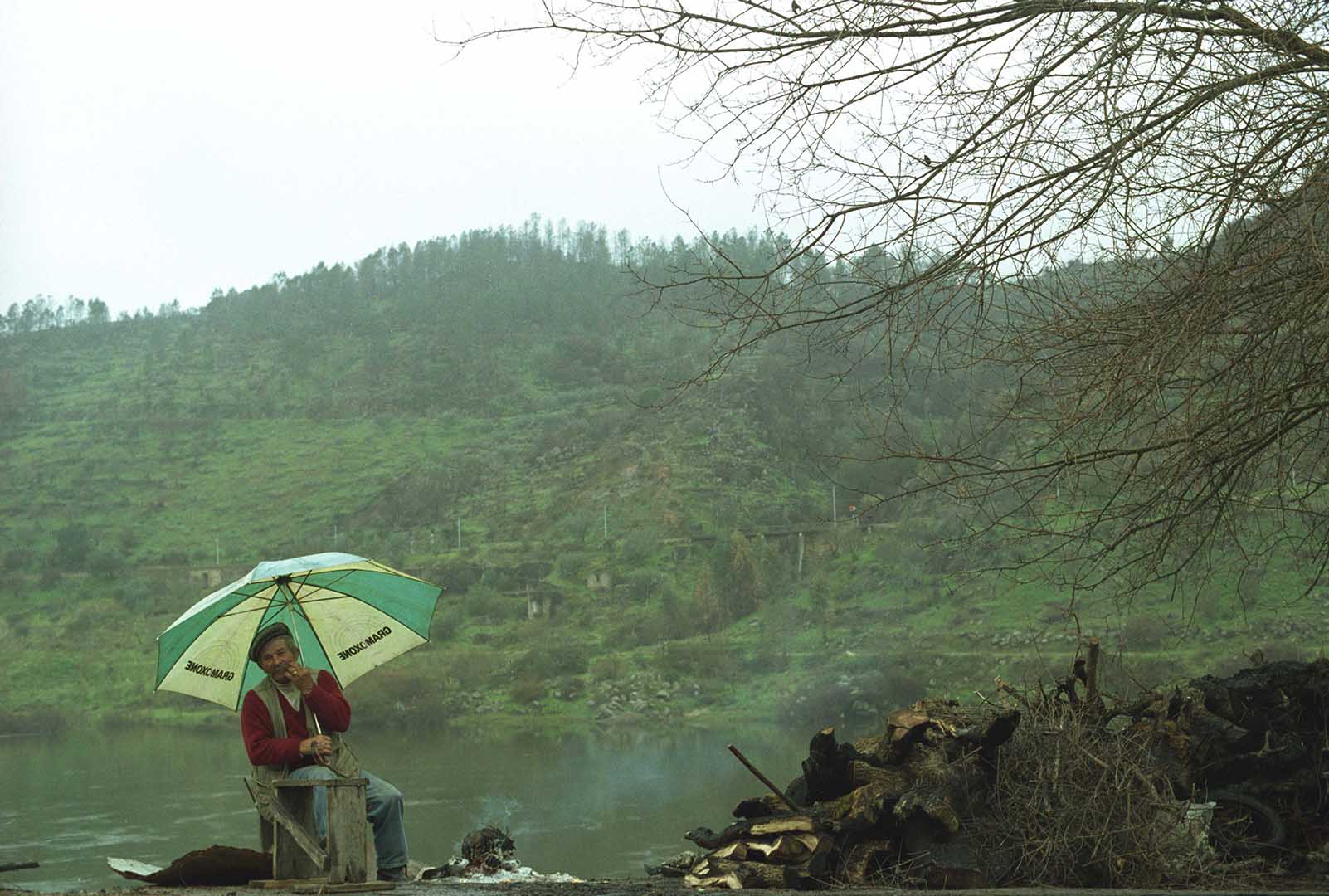
The process of getting to know the Amieira boatman began almost at the same time as filming. That was what interested me from the start—approaching it without preconceived ideas, with no clear starting point or path to follow. I was available to film and wait for whatever might happen, and he didn’t mind at all. On the contrary, he enjoyed the company.
The final film was shaped gradually, from the first day of filming to the moment I began selecting images for editing.
The goal was never to direct the character, but rather to let him show me his rhythm. The rhythm of his days, the months, the changing seasons. There were days when I came down and didn’t even bring the camera. On other days—though few—I could tell from his eyes he wasn’t in the mood.
A year after I had filmed through the four seasons, the unexpected happened. A few months later, near the end of filming, he asked me:
– Want to go to the other side?
And I’ll leave it at that. I invite anyone reading these lines to watch the documentary if they haven’t already.
THE BOATMAN’S HOUSE AT DOC LISBOA
The documentary premiered at the Grande Auditório of Culturgest on October 22, 2007, and was awarded two prizes at the Doc Lisboa 5th edition:
- Sony Award for Best First Work
- IPJ Schools Award
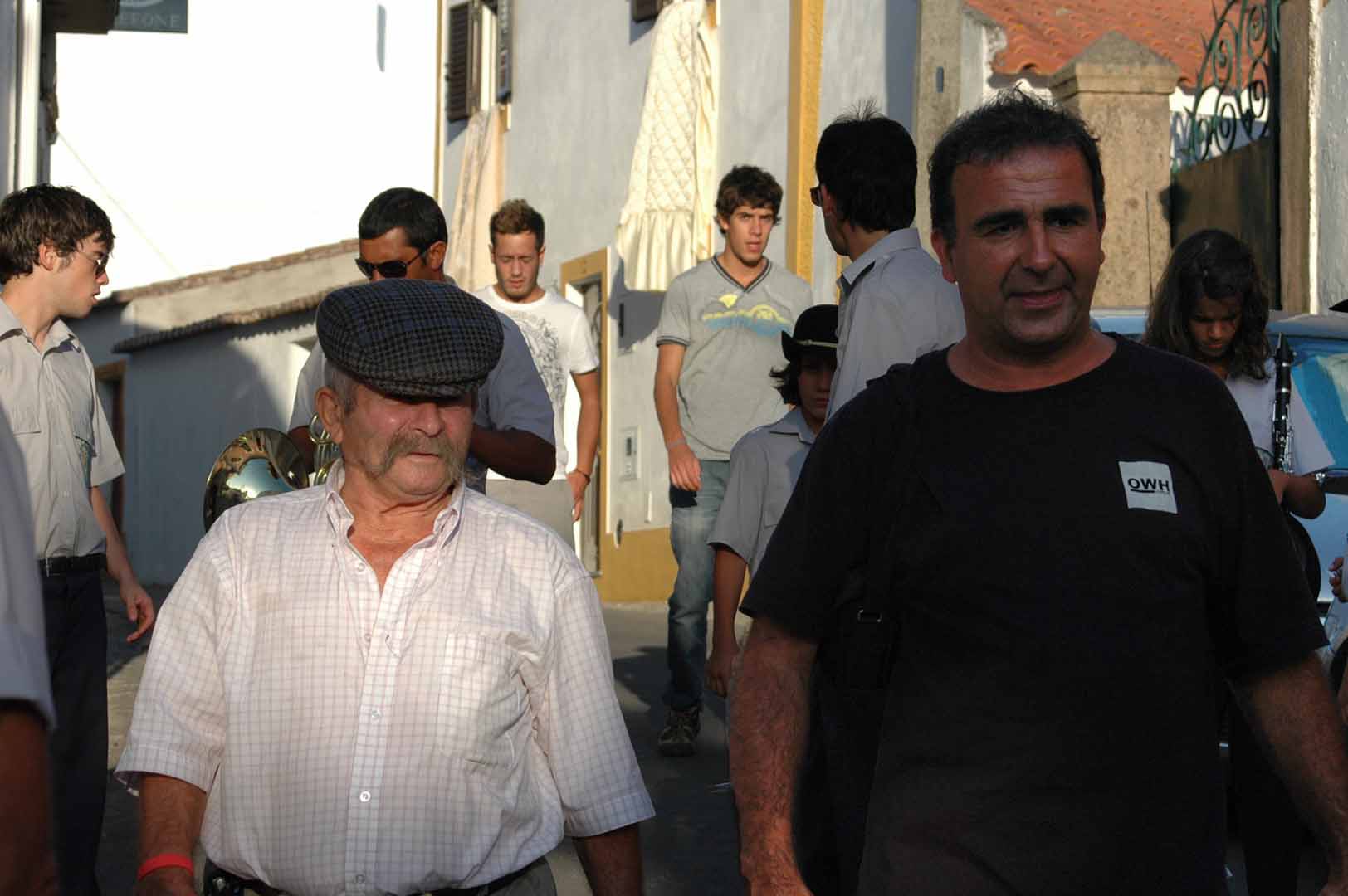
After the film, the awards, and the premieres, we remained friends. Even after I left Amieira do Tejo, I visited him, missing his grumbling and good spirits.
Thanks to the trust and friendship of a friend and his family—who arranged a house for me to stay in while making the film (without which the documentary would never have happened)—a tribute to the boatmen of Amieira was organized.
Boat trips across the river, barbecue, beer, and drinks aplenty were part of the celebration. By the Tagus, a plaque was unveiled in honor of all the boatmen.

Paulino was thrilled, and I believe that, even though he was no longer the boatman, he finally felt that his mission had been acknowledged and appreciated by his neighbours.