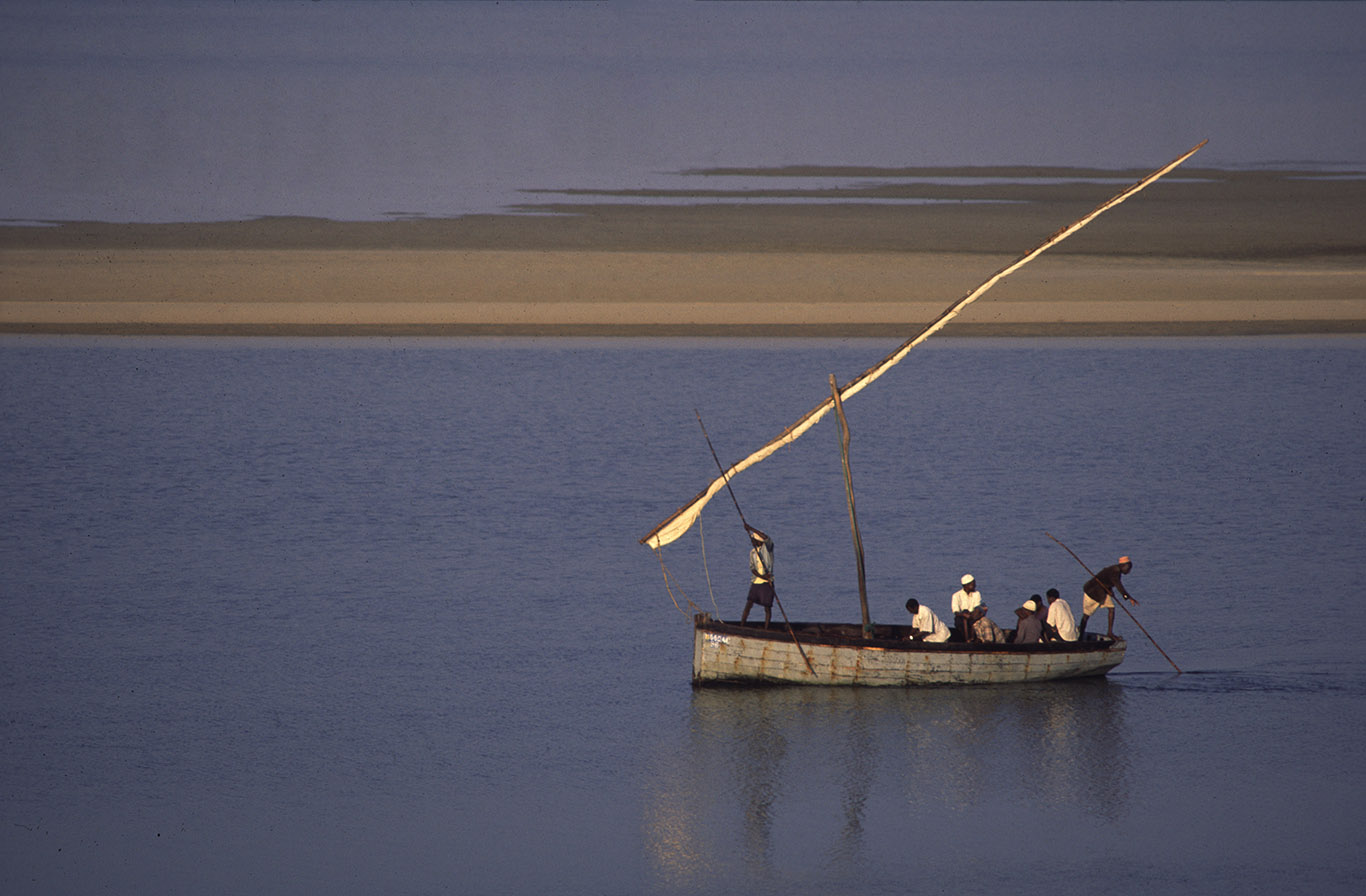
Although the Island of Mozambique is no more than 3 km long and just under half a kilometer wide, it had, at the time these photographs were taken in 1996, a population of nearly 15,000 people. Apart from fish and salt, nearly everything else must be brought in from outside. The 3-kilometer bridge that connects the island to the mainland is a key route for the supply and distribution of goods. However, the movement of products and goods still largely depends on boats coming from various coastal points — Mossuril Bay being one of the most important.
Here, as can be seen and heard, the sea does not separate, but rather connects the island to the mainland — and vice versa.
BOARDING AT MOSSURIL BAY
There’s a great hustle and bustle as people arrive and depart for the Island of Mozambique and return to the mainland. At sunrise, boats and people begin arriving in Mossuril Bay to cross the channel that separates them from the island.
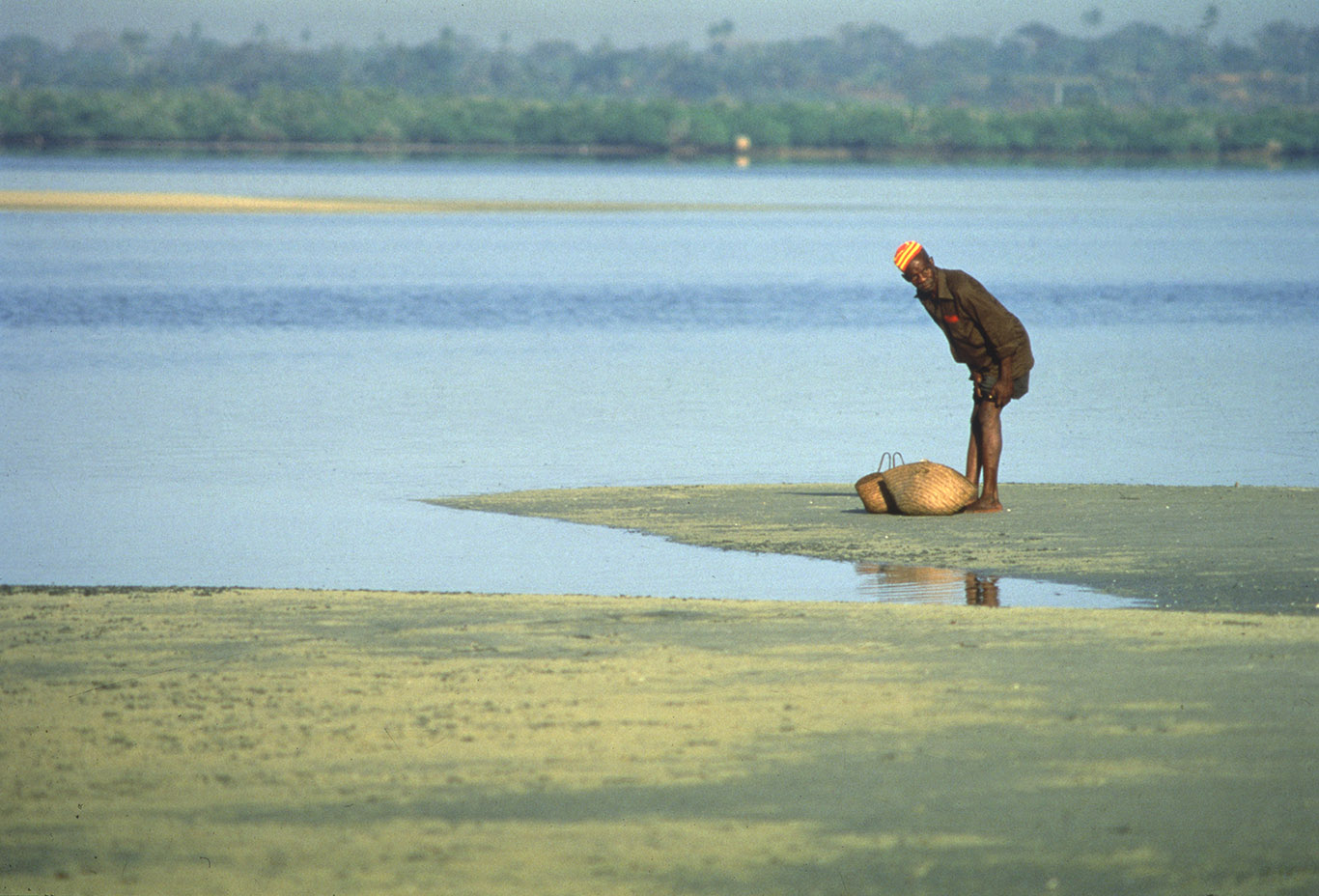
It is the tide that determines the best spot for boarding. When the tide is low, people must walk through the water to reach the boat waiting to take them across.


In tune with the tide, the boats position themselves as close to the sandbanks as possible without running the risk of running aground.


There’s no time to waste — once passengers and cargo are aboard and no more people are visible nearby, it’s time to depart. Before raising the sail, the best path must be carefully chosen, and a long pole, pushed against the shallow seabed, is used to guide the boat out into open water, heading toward the Island of Mozambique.
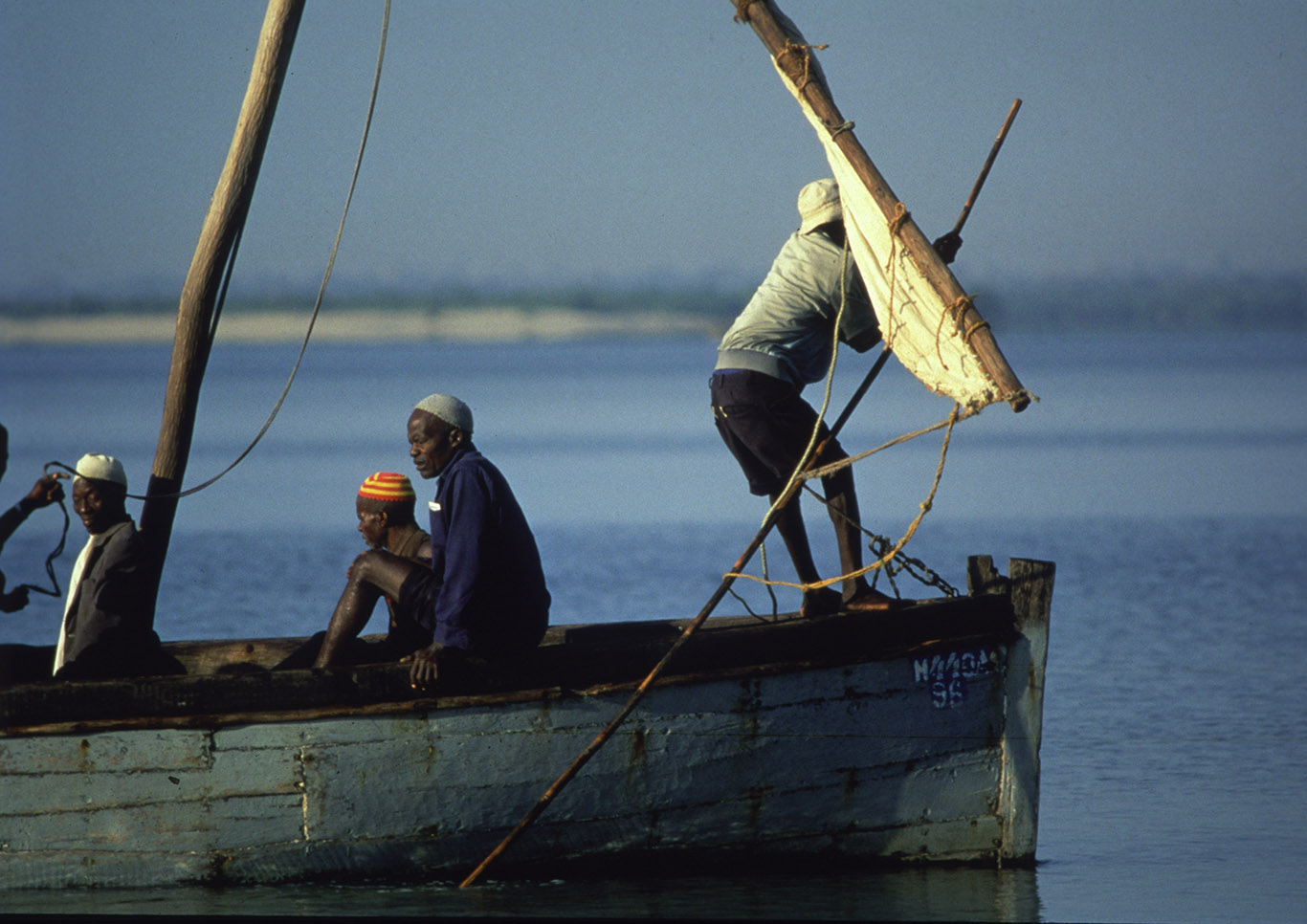
Since images can’t convey sound, I include here Francisco Leal’s audio recording of the boarding at Mossuril.
These records were made for the Cultures of the Indian Ocean exhibition, promoted by the National Commission for the Portuguese Discoveries, commemorating the 500th anniversary of Vasco da Gama’s voyage to India. The exhibition opened in May 1998 at the National Museum of Ancient Art.
THE CELEIRO PIER
The main arrival and departure hub on the island is at Celeiro. It’s a place of constant movement — people preparing to board and boats swiftly approaching, suddenly lowering their sails as they reach the shore.


Celeiro truly reflects the heartbeat and vitality of the Island of Mozambique. As a place that has endured numerous crises throughout its history, it continues to attract people from afar and from nearby areas alike — while also hosting a growing resident population.


