


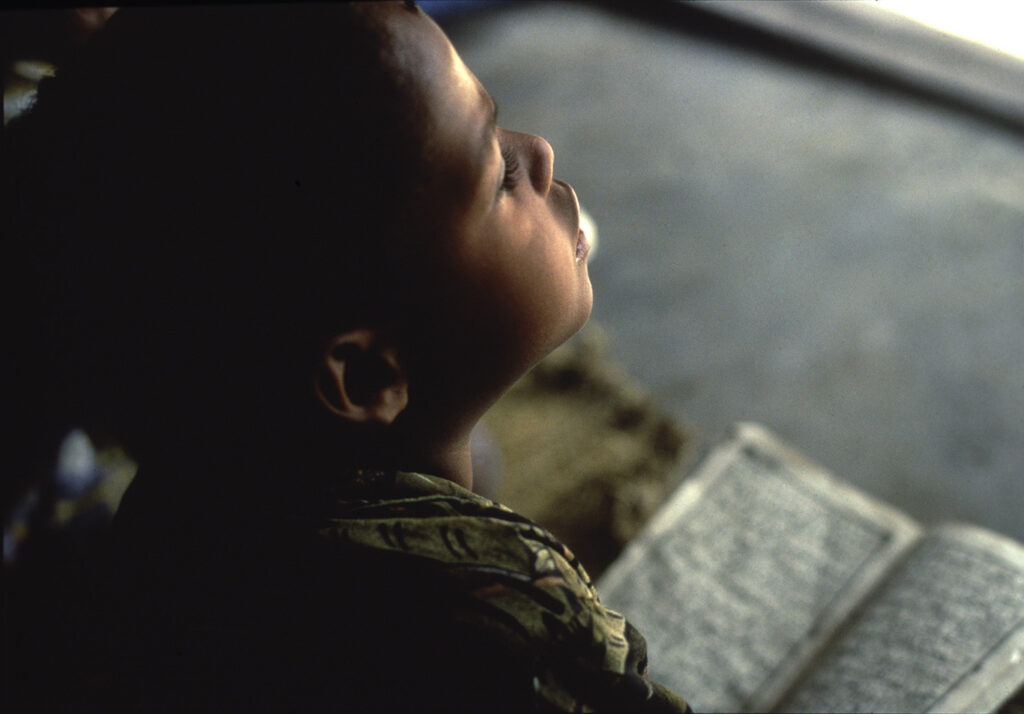


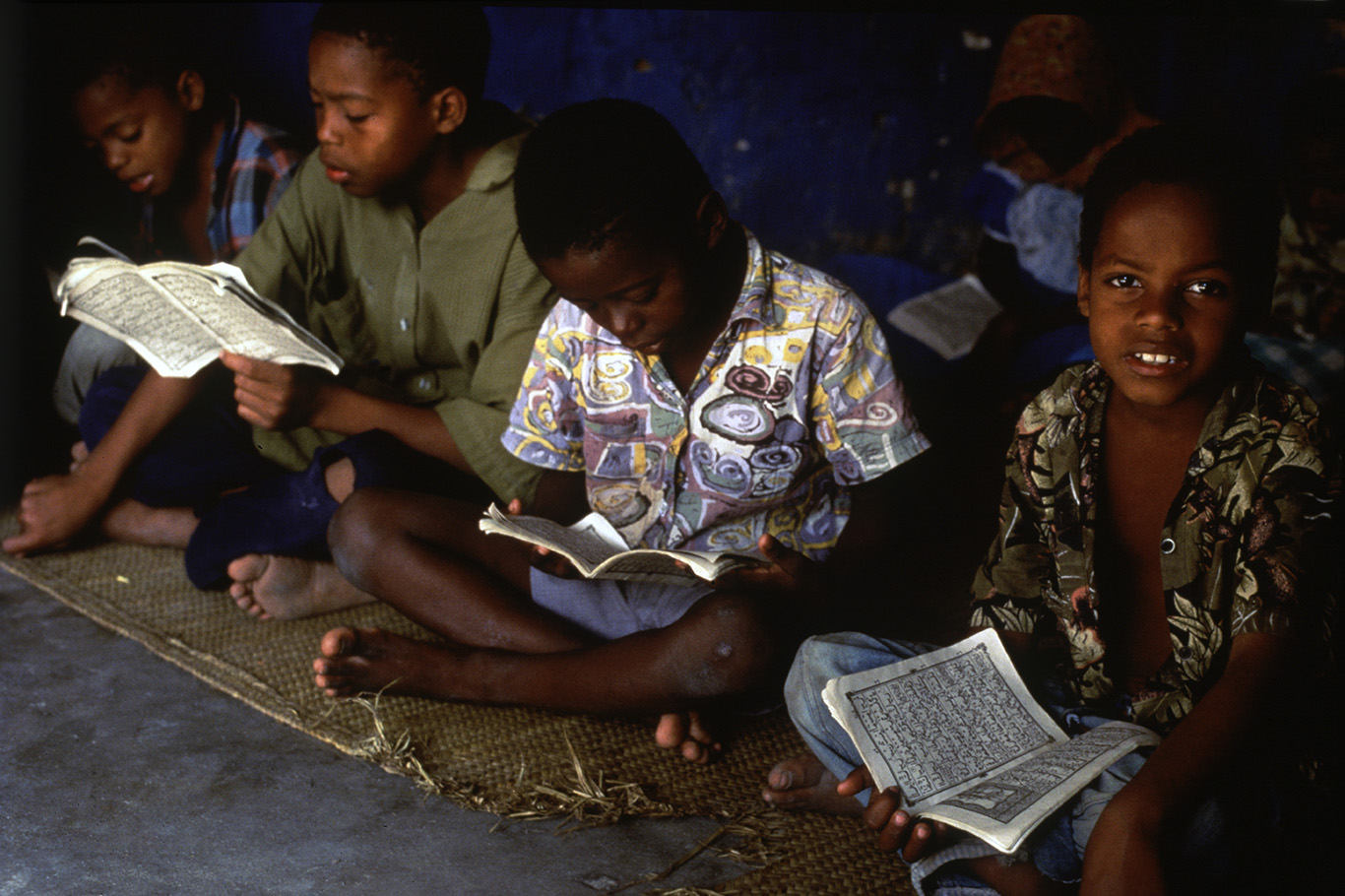
We are inside a Madrasa in Old Stone Town, Zanzibar.
In the front row sit the boys, followed just behind by the girls.
Here, the students learn to recognize and pronounce the letters of the abjad, the writing system used for the Arabic language, as well as for others such as Persian, Urdu, and Pashto.
Zanzibar’s historic quarter, Old Stone Town, is a fascinating place that reflects the coexistence of countless influences still vibrantly alive today.
Through migrations between the interior of the continent and the East African coast, and through long-distance trade following the rhythm of the monsoon winds—from here to the Arabian Peninsula and the Indian Subcontinent—this place became a crossroads of cultural exchanges.
Over time, deep and lasting connections were formed between people of diverse origins, particularly Africans, Arabs, Persians, Indians, and Europeans.


