
In the northwest of Zanzibar, near the village of Fukuchani, lie the remnants of a coral stone house that appears to have been partially built by the Portuguese in the 16th century, on top of a pre-existing structure in a Shirazi settlement.


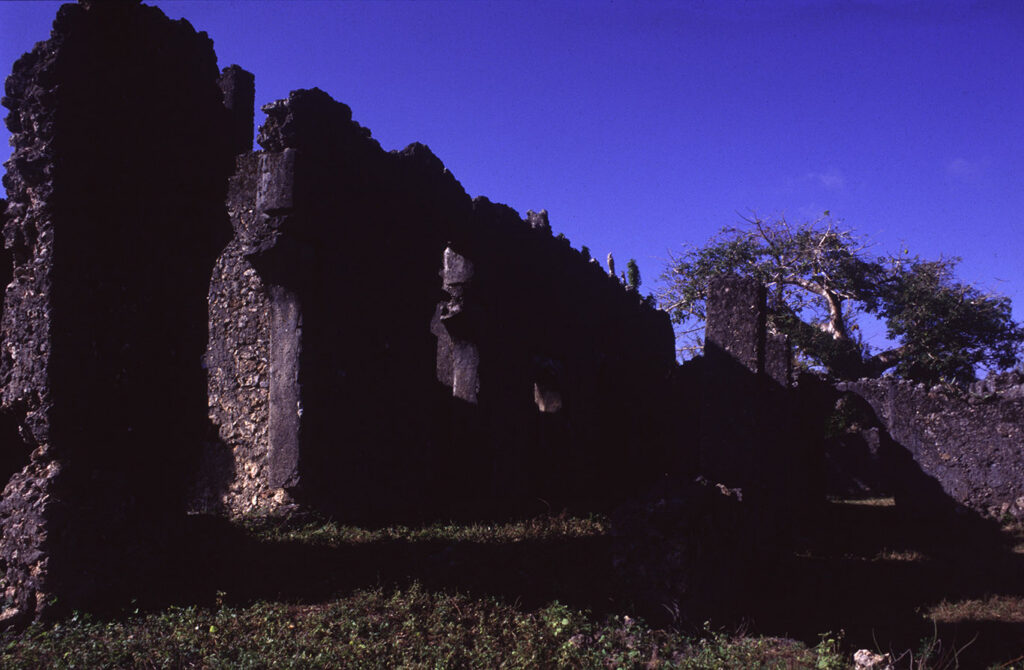


Locals refer to the ruins as the “Portuguese House.” The building is said to have had pointed stone arches and appears to have been a fortified domestic dwelling, with gun slits in the gatehouse walls.

PORTUGUESE CANNONS WITH PERSIAN INSCRIPTIONS
Beyond the coral houses in Fukuchani, there are several traces of Portuguese presence on the island — particularly in the capital, Old Stone Town, where there is even a Portuguese Street.
In the central area near the House of Wonders, two Portuguese cannons can be seen, one of which was likely captured in Hormuz by the Persians in 1622. As indicated by the plaque, the cannons bear the Portuguese coat of arms, and were later inscribed with Persian script.


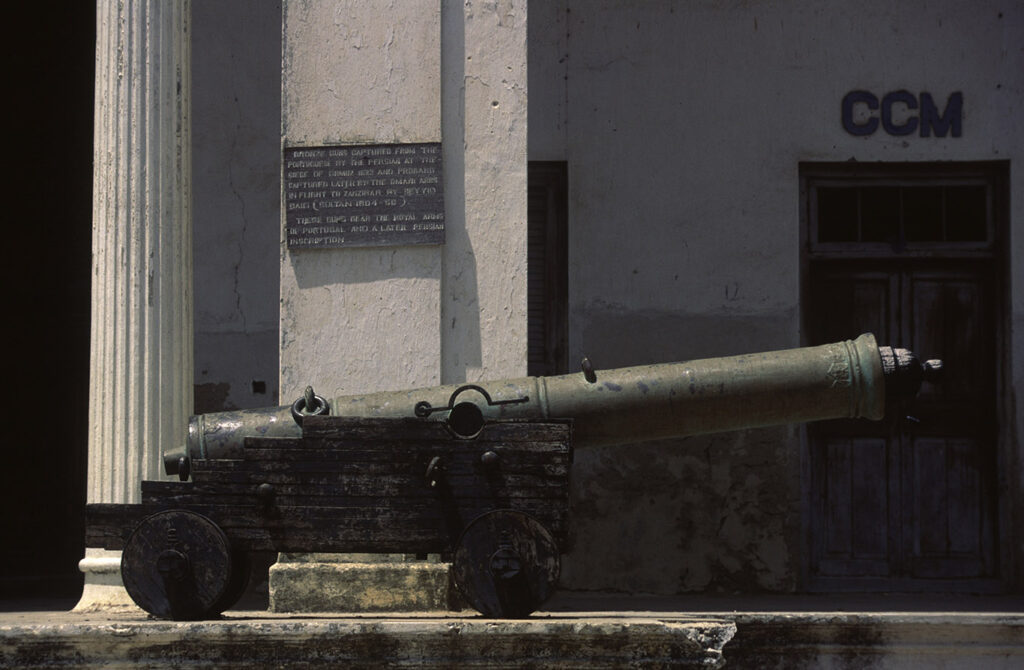
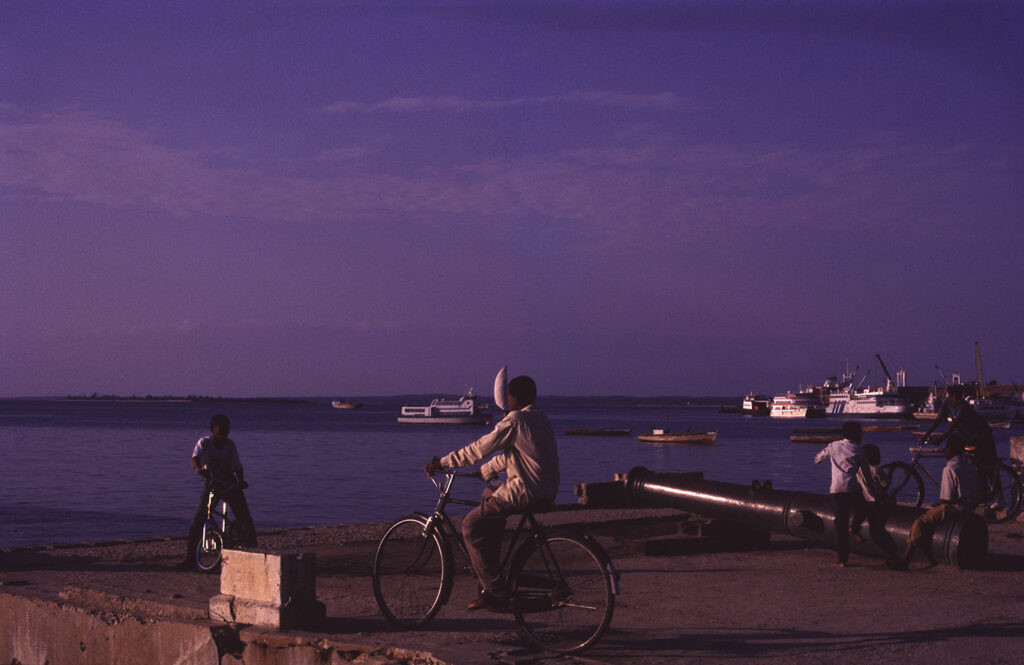
Diante deste canhão, encontra-se um outro na zona marítima, com a mesma inscrição,



A few decades later, from the late 17th century, the Portuguese were permanently expelled from the region by the Swahili and their Omani allies, who then gradually extended their hegemony along the East African coast.
According to Professor Abdul Sheriff, whom I met while he was Director of the Zanzibar Archives, the Portuguese presence was not beneficial to the region. In his view, it was under the banner of Christianity and commerce that military force was introduced — something that had previously been relatively insignificant in the commercial world of the Indian Ocean.