Filmed on the island of Santiago, in Cape Verde, the documentary follows the daily lives and expectations of three Rebelados who await the end of the world, foretold by the elders to occur at the turn of the millennium.
Over the course of one agricultural cycle, the camera follows the day-to-day life of three characters—a father and his two children—as they work the land, travel back and forth to urban centers, and spend the nights in prayer. On the night of December 31st, they gather for prayer and baptize the youngest before Judgment Day arrives.
Nhô Xote and his children, Domingos and Serafina, share the anguish of the end times foretold in the Scriptures. They reject the power of the state and the church. Salvation will come with the return of Christ to Earth to bring justice among men. “You will reach the year 1000, but will not pass 2000.” The moment is near, but “no one knows the day or the hour, not even the angels in Heaven.”

IN THE LANDS OF POVERTY
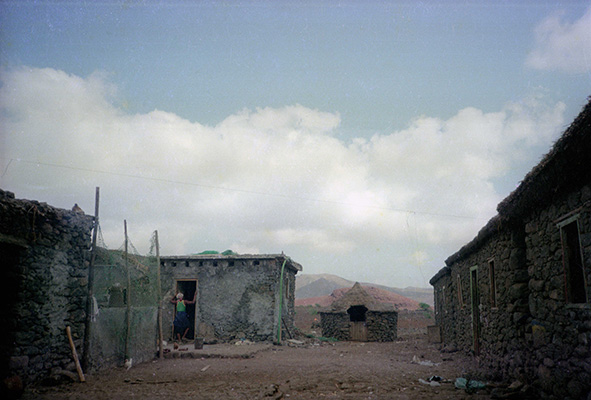
The film was shot in three Rebelados communities: Bimbirim, Saltos de Cima, and Calheta de São Miguel. I first discovered Bimbirim in 1990, eight years before I began filming. At the time, it consisted of little more than a handful of adjoining houses, all belonging to the same family, a few hundred meters from the sea.
At first glance, what stood out were the houses, built from stone and thatched with straw—except for a single one made of cement

I had gone in search of the Rebelados. I already knew those of Espinho Branco, about 20 km to the south. There, a weekly ritual brought together members who came on foot from nearby villages, bearing the flag of the PAIGC—the African Party for the Independence of Guinea and Cape Verde—leading the procession.
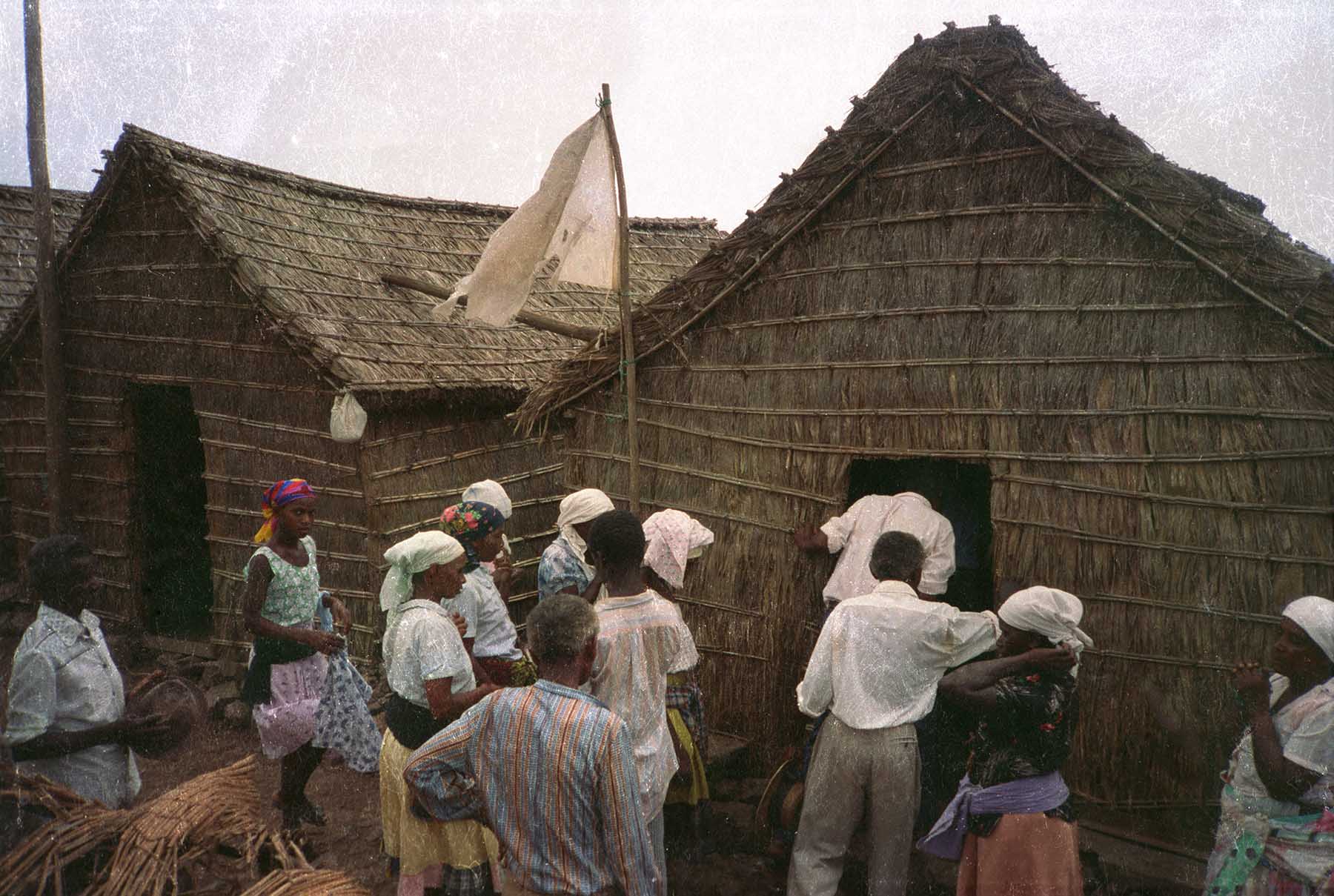
These Rebelados viewed Amílcar Cabral as the messiah, sent by God to free Cape Verdeans from colonialism. In 1975, they went to the capital, Praia, to request the Party’s flag, which became their symbol of struggle and resistance.
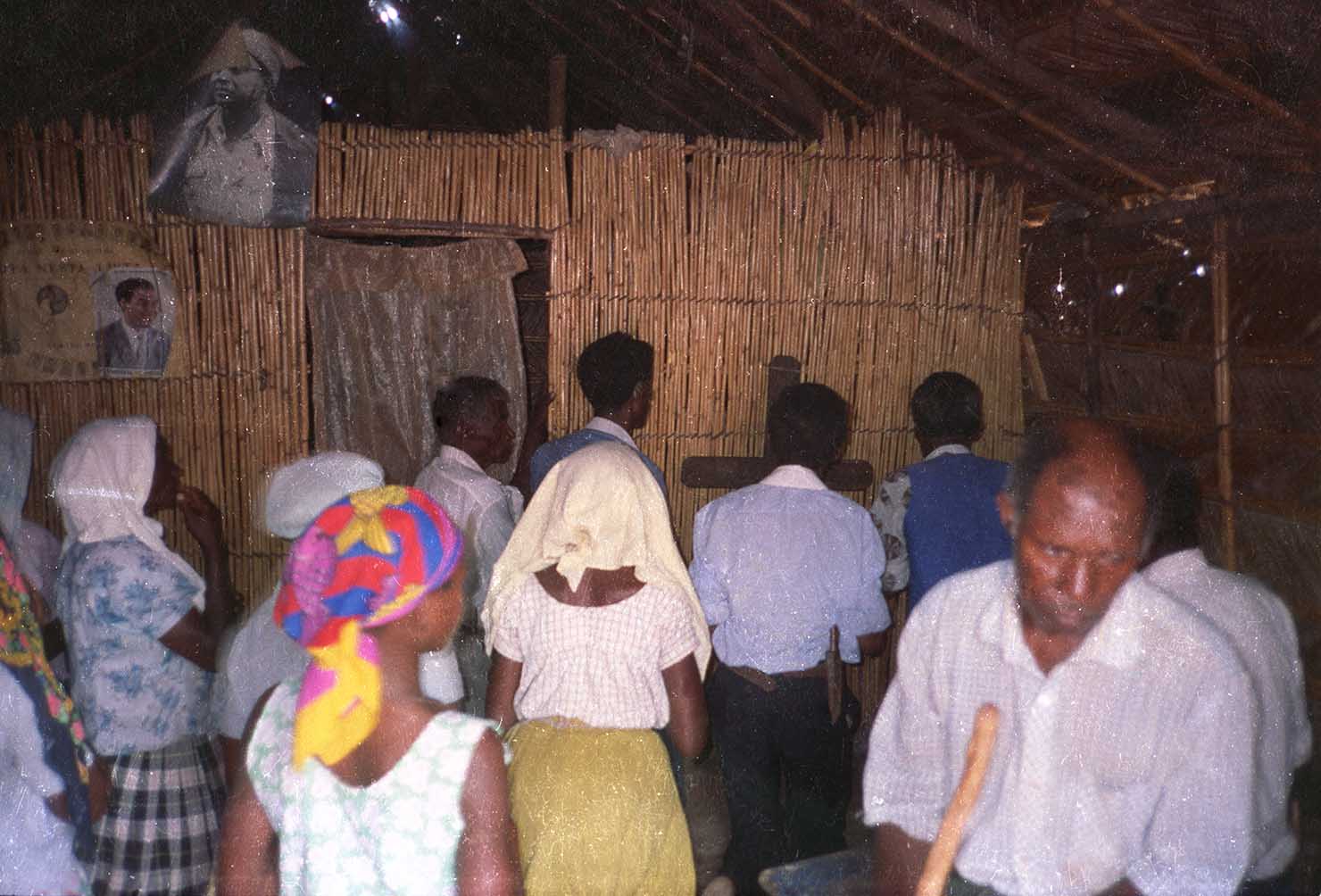
From the little that was known—and what I had experienced — I realized in Bimbirim that the Rebelados were far from being a monolithic group 15 years after July 5, 1975 (Cape Verde’s independence day).
Here, Cabral was not venerated because “God is only One,” said Nhô Xote.

At that point, I began my fieldwork in what were known as the lands of poverty (porabeza), dryland areas on the margins of the old land grants (morgadios).

Visibly, what distinguished the Rebelados from their neighbors was their lack of access to the state, healthcare, education, and even emigration. They had no documents and, therefore, no official existence. What was the underlying reason for all this?
A few years later, I felt it was time to share this new world that had opened up to me, leaping from academic immaturity to cinematic immaturity: and so I made my first documentary in Cape Verde. Not to “explain” what the Rebelados were, but to start from the daily life of three generations of the same family, to better understand who these people were and the changes that were already becoming evident.

I ended up not writing the thesis which, according to academic guidelines (!), should have focused on the “peasants,” with the Rebelados relegated to the final chapter of the dissertation.
There was a significant twist that made filming harder: they were no longer a “subject” of study—they had become my friends.

THE PREMIERE IN BIMBIRIM
After filming, I clearly remember the premiere of the documentary in Bimbirim. As it should be, they were the first to see it. It required a whole logistical setup that would be simple today but wasn’t back then: a generator, projector, sound system, screen. But what worried me most was how the film would be received by the protagonists.

As night fell and my nervousness grew, Serafina—one of the main characters—came to me, equally nervous, and said with her usual frankness:
— Jorge, I don’t want to appear in the film after all. Can you take me out of it?
I told her that it wasn’t possible at that point, but assured her that if there was anything she didn’t like, I would remove it from the final version.
At the end of the screening, she reassured me:
— Actually, there’s no need. It’s all fine.
MY FATHER’S VISIT IN 1990
Over time, I was increasingly confronted with the closeness and friendships I had formed—relationships I still maintain with some of these people.


I recall when my father visited me in Tarrafal while I was doing fieldwork in 1990. There was great anticipation, which grew as his visit approached. One day, a friend asked me if my father was whiter or darker than his, and I didn’t know how to answer.
When he arrived in Bimbirim, they wouldn’t let him leave without a batuque (drumming celebration). I recorded that unforgettable night, and I share that memory here.
IT´S NEVER TO LATE

How much this film changed my life—and the lives of many who participated in it—would probably merit another documentary.
Because it’s never too late.
Maybe one day. Who knows?